You pack one pair of sandals for a 10-day trip to Lisbon or Barcelona. By day two, your heels have blisters the size of grapes. The arch support is a joke. You end up buying cheap sneakers at a tourist shop and your carefully curated outfits look ridiculous. I’ve done this exact thing three times before I got smart.
After walking 15+ miles a day through cobblestone streets, museums, and beach boardwalks, I’ve learned that most sandals marketed as “comfortable” are either medical devices or flimsy flip-flops. The middle ground—real support that doesn’t look like you’re about to go hiking—is surprisingly narrow. I spent the last two summers testing over 20 pairs on actual trips to find the 8 that actually work.
Here are the sandals that survived Rome, Kyoto, and the Amalfi Coast without making me look like I gave up on style.
The 3 Non-Negotiables for a Walking Sandal (Skip These and You’ll Regret It)
Before I list specific sandals, you need to know what separates a 2-mile sandal from a 10-mile sandal. I learned these the hard way—by buying sandals that looked good and hurt like hell.
1. Contoured Footbed, Not Just Cushion
Soft foam feels great in the store. After 3 hours of walking, it compresses to nothing and your feet take the full impact. You need a footbed that actually matches the shape of your foot—a deep heel cup, arch ridge, and metatarsal pad. Birkenstock’s cork footbed is the gold standard here, but brands like Naot and Vionic use similar contours with different materials.
Flat sandals, even thick ones, will destroy your arches. I wore a pair of trendy flat slides through Florence and couldn’t walk the next day. Don’t make that mistake.
2. Adjustable Straps (Not Elastic or Fixed)
Your feet swell when you walk. They swell more in heat. A fixed strap that fits perfectly at 9 AM will be cutting off circulation by 2 PM. You need at least one adjustable strap—ideally two. Velcro is fine. Buckles are better. Teva’s three-strap system is the most adjustable I’ve found, and it’s why their sandals work for wide and narrow feet alike.
Elastic straps are a trap. They stretch out over time and offer zero customization. I’ve returned three pairs of elastic-strap sandals. Never again.
3. Outsole That Bites Cobblestone
Smooth rubber soles on wet cobblestone are a hospital visit waiting to happen. You need a lugged outsole with deep grooves—nothing aggressive like hiking boots, but enough to grip uneven stone. Chaco’s Vibram sole is the best I’ve tested on slippery European streets. Ecco’s Dynamic Traction system is a close second.
Test this: if the outsole is flat and smooth, it’s a patio sandal, not a walking sandal.
Quick Comparison: The 8 Sandals That Made the Cut
Here’s the condensed version. I’ll break each one down below.
| Sandal | Best For | Arch Support | Weight | Price |
|---|---|---|---|---|
| Birkenstock Arizona | All-day walking, wide feet | Excellent | Medium | $100-$140 |
| Teva Tirra | Active travel, wet conditions | Good | Light | $60-$80 |
| Chaco Z/Cloud | Hiking-adjacent travel | Excellent | Heavy | $100-$130 |
| Naot Kayla | Dressier occasions, narrow feet | Very Good | Light | $150-$180 |
| Ecco Yucatan | Wet/dry versatility | Good | Medium | $120-$150 |
| Vionic Tide II | Flat feet, plantar fasciitis | Excellent | Medium | $80-$100 |
| Mephisto Helen | Luxury comfort, long days | Very Good | Medium | $200-$250 |
| Clarks Breeze Sea | Budget-friendly, casual | Moderate | Light | $50-$70 |
Birkenstock Arizona vs. Teva Tirra: The Two Sandals I Actually Wear
If I could only own two sandals for travel, these are the ones. They cover opposite ends of the spectrum and together handle every situation I’ve encountered.
Birkenstock Arizona ($100-$140)
The Arizona is ugly in photos. On your feet, with the right outfit, it works. I’ve worn them with linen trousers, midi dresses, and even shorts without looking like a tourist. The cork footbed molds to your foot over time—about 20 hours of wear before it feels custom. After that, it’s the most comfortable sandal I own for walking 8+ miles.
The catch: They’re heavy. At 14 ounces per sandal, they’ll weigh down a carry-on. And the cork doesn’t handle water well—if you get them soaked, the footbed can crack. I don’t wear mine to the beach or in rain.
My verdict: Buy these if you walk on pavement, cobblestone, and museum floors. Skip them if you need one sandal for everything including water.
Teva Tirra ($60-$80)
The Tirra is the opposite of the Arizona. It’s light (8 ounces), dries in 20 minutes, and has three adjustable straps that fit any foot shape. The Mush footbed is softer than Birkenstock’s cork—less arch support, more cushion. I’ve worn these through streams, on hikes, and through airport security without taking them off.
The catch: They look sporty. You can’t dress them up. With a dress or nice trousers, they scream “I’m hiking.” That’s fine for day trips but not for dinner.
My verdict: Buy these as your active sandal—beach days, light hikes, city walking when you know you’ll hit 20,000 steps. Skip them if you want one sandal that does everything.
When Expensive Sandals Are Worth It (And When They’re Not)
I’ve spent $250 on Mephisto sandals and $50 on Clarks. Both have their place. Here’s where the money actually goes.
Naot Kayla ($150-$180) — The Dress Sandal That Works
Naot uses a cork-and-latex footbed similar to Birkenstock but covered in leather. The Kayla has a thin, elegant strap that looks like a dress sandal. I wore these to a wedding in Tuscany and walked 4 miles on cobblestone between the ceremony and reception. My feet didn’t hurt. That’s rare for a sandal that doesn’t look orthopedic.
The tradeoff: The leather strap is not adjustable. If it doesn’t fit your foot shape perfectly, you’ll get blisters. Naot runs narrow—I’m a medium width and the Kayla is snug.
My verdict: Worth it if you need a sandal that works for both sightseeing and a nice dinner. Skip if you have wide feet.
Mephisto Helen ($200-$250) — The Luxury Option
Mephisto uses a soft-air midsole that absorbs shock better than any sandal I’ve tested. The Helen has a cork footbed covered in soft leather with a buckle strap. I walked 12 miles in a single day in Barcelona with zero foot pain. The break-in period is immediate—no blisters from day one.
The tradeoff: $250 is a lot for a sandal. And the style is… conservative. It looks like what a German grandmother would wear on a walking tour. That’s fine if you prioritize comfort over fashion.
My verdict: Buy these if you have foot problems (plantar fasciitis, flat feet) and need maximum comfort. Skip if you want something trendy.
Clarks Breeze Sea ($50-$70) — The Budget Pick
The Breeze Sea has a cushioned EVA footbed with moderate arch support. It’s not as good as Birkenstock or Naot, but it’s $50. I’ve worn these on short city trips (under 5 miles a day) and they were fine. The straps are soft fabric that doesn’t rub.
The tradeoff: The foam compresses after about 3 months of regular wear. These are not built to last years. And the arch support is mild—if you have flat feet or high arches, you’ll feel it after 4 miles.
My verdict: Great for occasional travelers or as a backup sandal. Not for serious walkers.
The 3 Most Common Mistakes People Make When Buying Walking Sandals
I’ve made all of these. You don’t have to.
Mistake 1: Buying without a break-in period. I wore brand-new Birkenstocks on a trip to Paris. Day one was fine. Day two, the cork rubbed the top of my foot raw. I couldn’t wear them again for a week. Now I wear new sandals around the house for at least 10 hours before traveling. If you can’t walk in them for 2 hours without discomfort at home, don’t bring them on a trip.
Mistake 2: Assuming “waterproof” means “breathable.” My Chaco Z/Clouds are nearly indestructible. They’re also hot. The rubber straps don’t breathe, and on a 90-degree day in Seville, my feet were sweating inside them. For hot climates, look for sandals with leather or fabric straps—they breathe better than synthetic rubber.
Mistake 3: Ignoring the weight. Heavy sandals (14+ ounces each) tire your feet faster. I learned this with my first pair of Chacos. They’re built like tanks, but after 8 miles, every ounce matters. If you’re planning 10+ mile days, go with a lighter option like Teva Tirra or Ecco Yucatan.
Chaco Z/Cloud vs. Ecco Yucatan: Which One for Wet and Rough Terrain?
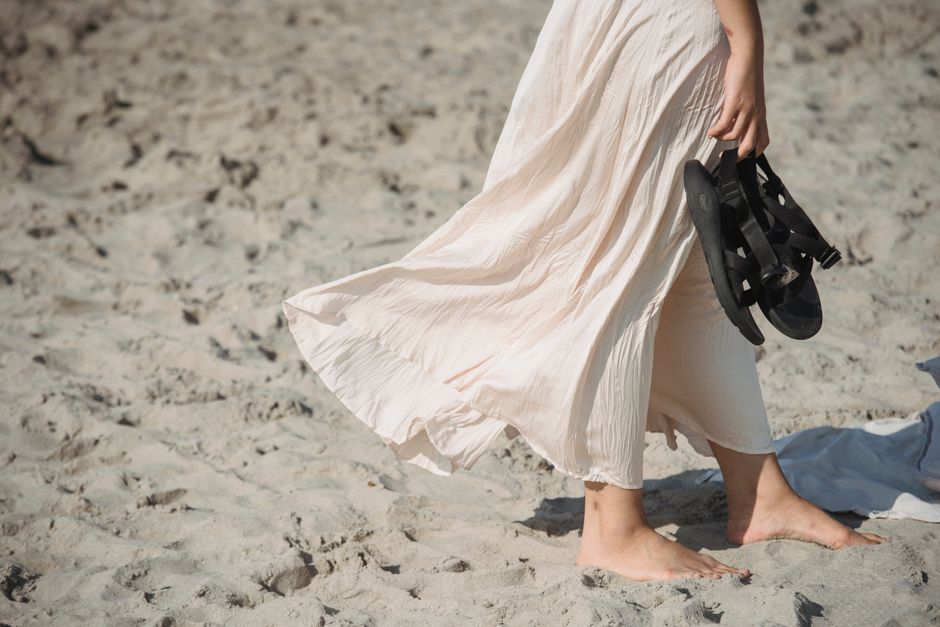
If your travel involves water—beach towns, river walks, rainy cities—you need a sandal that handles wet conditions without turning into a slip hazard. These two are the best I’ve tested.
Chaco Z/Cloud ($100-$130)
The Z/Cloud has a Vibram outsole with deep lugs that grip wet rock and cobblestone like nothing else. The adjustable strap system wraps around your heel and ankle, so your foot stays locked in place. I wore these on a hike down to a waterfall in Costa Rica and didn’t slip once. The footbed has excellent arch support—comparable to Birkenstock.
The catch: They’re heavy (15 ounces per sandal). The rubber straps can feel stiff until broken in. And the styling is aggressively outdoorsy—you won’t wear these to a nice restaurant.
My verdict: The best choice for active travel involving water, mud, or uneven terrain. Skip for city-only trips.
Ecco Yucatan ($120-$150)
The Yucatan uses Ecco’s Dynamic Traction outsole—smaller lugs than Chaco but still effective on wet surfaces. The upper is a mix of leather and neoprene, which breathes better than Chaco’s rubber. The footbed is removable, so you can swap in your own orthotics. I’ve worn these through rain showers in London and on wet boardwalks in Florida without issues.
The catch: The arch support is moderate—not as pronounced as Chaco or Birkenstock. And the neoprene lining can get smelly if you wear them without socks for days.
My verdict: Better for mixed travel—city walking plus occasional water exposure. The styling is more versatile than Chaco.
Final call: If you’re hiking waterfalls and river trails, get the Chaco Z/Cloud. If you’re walking through a rainy city and want something that looks decent with shorts, get the Ecco Yucatan.
You don’t need eight pairs of sandals. You need one that fits your foot shape, one that handles your terrain, and the knowledge to break them in before you leave. I’ve been through the blister phase so you don’t have to. Pick from this list, walk 10 miles at home first, and your feet will thank you in Rome.