Most women walk into an interview thinking they need a black suit. That is a myth. Recruiters told me they care more about fabric quality and fit than color — and a black suit that fits poorly screams “I borrowed this from a costume shop.” In 2026, the rules have shifted. Here is what actually signals competence without looking like you are wearing a uniform.
The Three Things Recruiters Notice Before You Say a Word
Interviews are visual within the first seven seconds. Recruiters I spoke with across tech, finance, and non-profit sectors agreed on three non-negotiables: fabric quality, fit across the shoulders, and shoe condition. Not color. Not brand logos. Not whether you own a blazer at all.
Fabric Quality Trumps Brand Names
Polyester blends that look shiny under office lighting read as cheap. A wool-blend blazer from Theory ($395) or Aritzia ($225) holds its shape and does not wrinkle after sitting for an hour. Cotton-linen blends work for creative fields but wrinkle fast — avoid them if your interview is longer than 30 minutes.
Check the label. You want at least 50% natural fiber (wool, cotton, linen). Anything below 30% natural fiber will look like plastic within two wears.
Shoulder Fit Is the Only Fit That Matters
Blazers that pull across the back or droop off the shoulder ruin the entire silhouette. A tailor can fix sleeve length and waist suppression for $30–50. A tailor cannot fix shoulders that are too wide or too narrow. Try on blazers with the top button done. If you see horizontal creases across your upper back, the jacket is too small. If the shoulder seam falls past your natural shoulder bone, it is too large.
Shoes: The $100 Test
Scuffed heels or worn-down soles signal carelessness. A pair of Everlane The Day Glove ($98) in black leather or Naturalizer Morrison ($110) with a 2-inch block heel pass the test. Flats are acceptable if they are leather and have a structured toe. Avoid suede in rain or snow — it stains immediately.
Blazer or No Blazer? The Real Answer for 2026

You do not need a blazer for every interview. This is the single biggest shift from 2019 advice. In creative fields (marketing, design, media), a structured knit blazer or a high-quality cardigan with a crisp collared shirt works better. In conservative fields (law, finance, consulting), a blazer is still required.
| Industry | Blazer Required? | Best Option Under $300 |
|---|---|---|
| Finance / Law / Consulting | Yes — structured wool or wool-blend | MM.LaFleur The Mason Blazer ($295) |
| Tech / Startups | Optional — knit blazer or structured cardigan | Everlane The Oversized Blazer ($178) |
| Creative / Media / Non-profit | Optional — high-quality sweater or blouse | Aritzia Wilfred Blazer ($225) |
| Healthcare / Education | Not needed — smart separates | Brooks Brothers No-Iron Shirt ($89) |
If you skip the blazer, your shirt or sweater must be immaculate. No pilling. No loose threads. No visible deodorant marks. A cotton poplin shirt from Brooks Brothers ($89) pressed within 24 hours of the interview is a safe bet.
Pants vs. Skirts vs. Dresses — Which One Signals Authority?
There is no universal winner. Each option signals different things depending on your body type and the room you are walking into. Here is the breakdown based on what recruiters actually said.
Wide-Leg Trousers: The 2026 Power Move
Straight-leg and wide-leg trousers have replaced skinny pants in professional settings. A pair of Everlane The Wide-Leg Crop ($98) in a dark navy or charcoal reads as current without being trendy. The key is length: the hem should just skim the top of your shoe, not puddle on the floor. Hemming costs $15 at a dry cleaner.
Pencil Skirts: Still Work, But Only If Fitted Correctly
A pencil skirt that gaps at the waist or pulls across the hips looks sloppy. MM.LaFleur The Harper Skirt ($195) has a hidden elastic back panel that eliminates gapping. Pair it with a blouse that tucks in cleanly. Avoid skirts that hit above the knee — midi length (just below the knee) is the standard for conservative interviews.
Sheath Dresses: The One-Piece Shortcut
A sheath dress in a solid color (navy, charcoal, burgundy) with a blazer eliminates the need to coordinate separates. Calvin Klein Sheath Dress ($129) is a reliable option. Add a structured belt to define your waist if the dress is loose. Do not wear a dress that requires constant tugging or adjusting — it will distract you during the interview.
The Accessories Trap: What to Leave at Home
Accessories can undermine an otherwise perfect outfit. Here are the three mistakes I see most often.
Jewelry that makes noise. Bangles that clank against a table or necklace charms that hit the microphone on a video call are distracting. Remove anything that makes sound when you move your hands. One pair of stud earrings and a simple watch (leather band, not smartwatch) is enough.
Scarves that compete with your face. A bright silk scarf worn around the neck draws attention to your throat, not your eyes. If you want a scarf, wear it tied to your bag handle or skip it entirely.
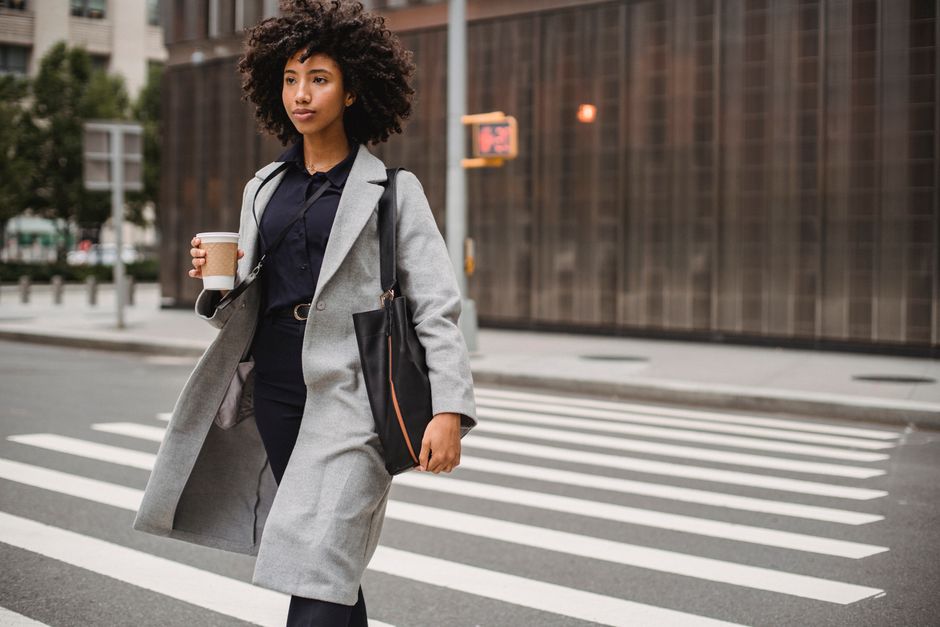
Bags that are too casual. A canvas tote or a backpack says “I am running errands after this.” A structured leather tote in black or brown — Madewell The Transport Tote ($168) or Everlane The Form Bag ($145) — holds your resume and reads professional.
Color Psychology: What Each Shade Actually Communicates
Color matters more than most women realize. Recruiters form subconscious associations based on what you wear.
Navy: The safest choice. Communicates trustworthiness and competence. Works for every industry. Pair it with a white or cream blouse.
Charcoal gray: Authoritative without being aggressive. Preferred in law and finance. Avoid pairing with black shoes — go with dark brown or navy instead.
Black: Formal, but can read as severe if the fabric is cheap. Only wear black if the fabric is high-quality (wool or a wool blend) and the fit is tailored. Black polyester reads as funeral attire.
Burgundy or forest green: These colors work for creative and tech interviews. They signal confidence and individuality without being loud. Stick to one statement piece — a burgundy blazer with navy trousers, not a full burgundy suit.
White or cream: Good for blouses and shirts. Avoid white pants or white skirts — they stain easily and can look too casual. A white blazer works only in summer and only if it is linen or cotton.
Five Questions to Ask Yourself Before the Interview
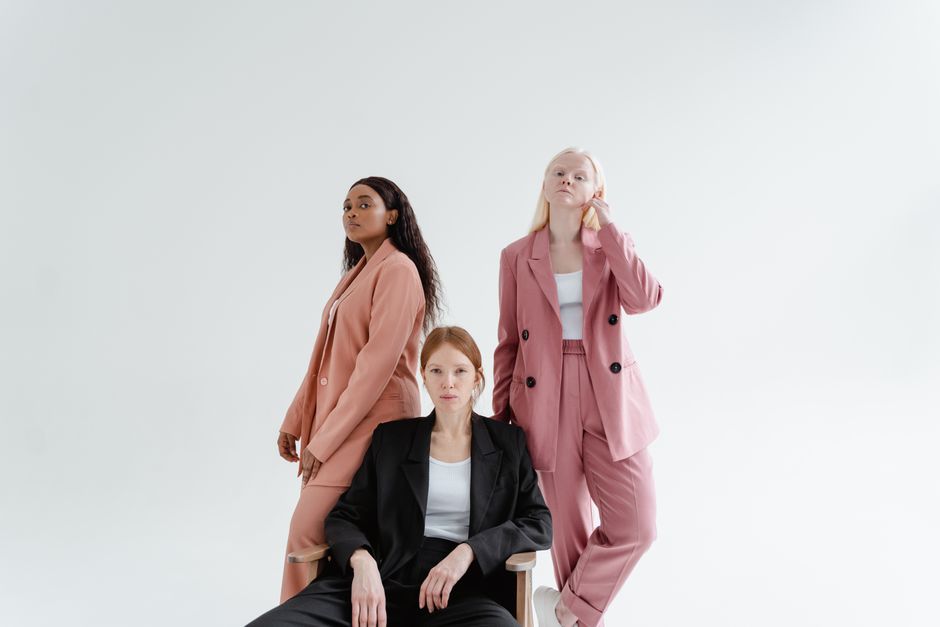
Before you leave the house, run through this checklist. If you answer “no” to any of them, change the outfit.
- Can I sit down comfortably? Sit in the outfit for five minutes. Does the blazer pull? Do the pants dig into your stomach? If yes, the fit is wrong.
- Are my shoes broken in? New shoes that rub against your heel will cause pain and distraction. Wear them around the house for at least two hours before the interview.
- Does the outfit wrinkle after sitting? Stand up and look in a mirror. If the back of your blazer or pants is wrinkled, choose a different fabric or bring a travel steamer.
- Is the outfit weather-appropriate? If it is raining, wear a trench coat over your blazer. Wet wool smells and looks disheveled. London Fog Trench Coat ($150) is a classic option.
- Would I feel confident meeting a CEO in this? If the answer is no, change it. Confidence shows in your posture, and your outfit directly affects your posture.
One final note: Do not wear something you bought specifically for this interview unless you have worn it at least once before. New clothes feel unfamiliar. Familiar clothes let you focus on the conversation, not on adjusting your collar.