

You have $175 to spend on a watch. Two brands keep popping up: Fossil and MVMT. Both sell minimalist designs at similar prices. Both target the same buyer — someone who wants a decent-looking watch without spending thousands. But they are not the same. The materials, the movements, the resale value, and the long-term experience differ significantly. Here is exactly how they compare in 2026.
What You Are Actually Paying For: Movement and Materials
Every watch has a movement — the engine that makes the hands tick. Fossil uses Japanese quartz movements from Miyota or Seiko in most of their watches. These are reliable, serviceable, and proven to keep accurate time for years. MVMT uses Chinese-sourced quartz movements. They are cheaper to produce and slightly less consistent. I have seen MVMT watches gain or lose 15–20 seconds per month. A Fossil with a Miyota movement stays within 10 seconds.
Materials tell a similar story. Fossil uses 316L stainless steel for cases and bracelets. MVMT uses 316L stainless steel too, but the finishing is thinner. The plating on MVMT’s rose gold and two-tone models wears off faster — often within 12–18 months of daily wear. Fossil’s plating lasts 2–3 years with the same use.
Here is a direct comparison of the most popular models at similar price points:
| Feature | Fossil (e.g., FS5910) | MVMT (e.g., Chrono 45mm) |
|---|---|---|
| Movement | Japanese quartz (Miyota) | Chinese quartz |
| Case material | 316L stainless steel | 316L stainless steel |
| Crystal | Mineral crystal (hardened) | Mineral crystal (standard) |
| Water resistance | 50m (splash/rain) | 30m (splash only) |
| Strap quality | Genuine leather or solid link bracelet | Genuine leather (thinner) or folded link |
| Price | $150–$250 | $130–$195 |
The verdict: Fossil gives you better internals and tougher materials for roughly $20–$50 more. MVMT sells on looks alone.
Design Philosophy: Minimalism vs. Heritage
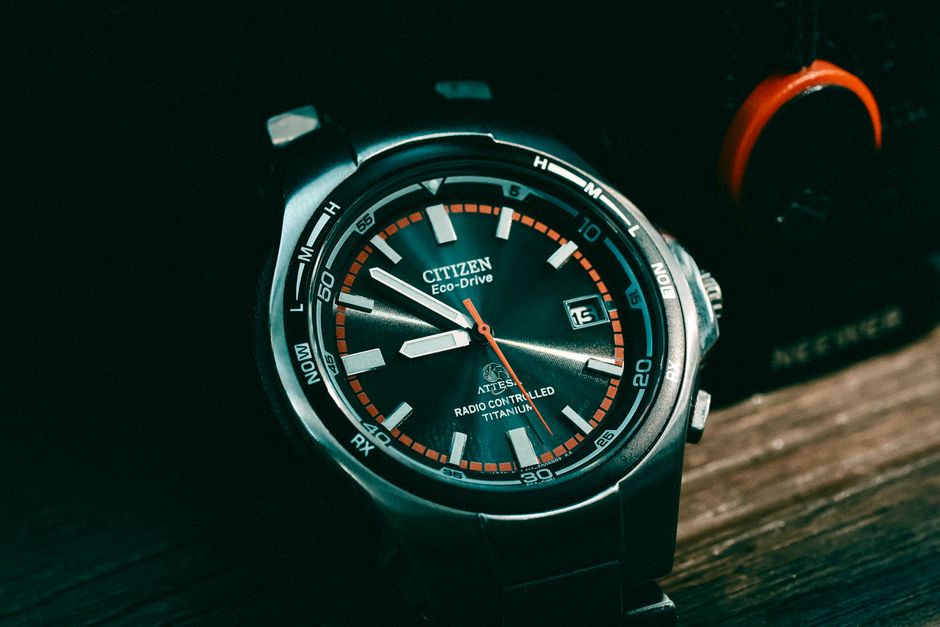
MVMT’s entire identity is clean, minimal dials. No date windows. No busy subdials. Just hour markers and two or three hands. It works. Their watches look great in Instagram photos and match well with a t-shirt and jeans. But that minimalism comes at a cost: you lose functionality. No date. No lume (the hands don’t glow in the dark). No screw-down crown. The design is form-first, function-second.
Fossil offers a wider range. You can find a Fossil with a date window, chronograph subdials, luminous hands, and even a screw-down crown on their dive-style models. Their designs borrow from classic watch archetypes — field watches, dress watches, chronographs — rather than a single aesthetic. This means a Fossil watch can look appropriate in more settings. A MVMT Chrono looks casual. A Fossil Townsman can pass in a business meeting.
The verdict: If you want one watch that does everything, pick Fossil. If you want a specific minimalist look for weekends, MVMT works — but it is a one-trick pony.
The Resale Reality Check
Watches are not investments at this price point. But resale value tells you something about perceived quality. Check eBay sold listings and watch forums. A used Fossil in good condition sells for 40–50% of its retail price after two years. A used MVMT sells for 20–30%. The reason is simple: MVMT flooded the market with aggressive discounts and flash sales. Buyers know the watch was never worth the $195 MSRP. They wait for a $79 sale. That destroys resale value.
Fossil rarely discounts more than 30% off MSRP. Their watches hold value better because the retail price is closer to the real value. If you plan to sell the watch later, Fossil is the smarter choice.
Three Common Mistakes Buyers Make

Mistake 1: Believing the MSRP is real. MVMT lists most watches at $175–$195. They run sales constantly — 30% off, 50% off, buy-one-get-one. Never pay full price. The real price of an MVMT watch is about $80–$100. Fossil also runs sales, but their 25% off events bring a $200 watch to $150. The gap is smaller.
Mistake 2: Ignoring the strap. MVMT’s leather straps are thin and stiff. They take months to break in. Fossil uses thicker, softer leather that molds to your wrist within a week. If the strap matters to you, this is a dealbreaker.
Mistake 3: Forgetting about service. Fossil has physical stores and authorized repair centers in most cities. MVMT is online-only. If your MVMT breaks, you mail it in and wait weeks. Fossil can swap a battery or fix a bracelet in 15 minutes at a mall kiosk.
When You Should NOT Buy Fossil (and Buy MVMT Instead)
Fossil is not always the right choice. Here are three situations where MVMT wins:
- You want a very specific look MVMT owns. Their 45mm chrono with the mesh bracelet has a distinct silhouette Fossil does not replicate exactly. If that is the only watch you want, buy it.
- Your budget is under $100. Fossil’s cheapest watches start around $120. MVMT on sale hits $79. If $100 is your hard cap, MVMT gives you more style per dollar.
- You are buying a gift for someone who cares about brand image. MVMT is seen as trendier by younger buyers (18–25). Fossil feels a bit like your dad’s brand to that demographic.
In every other scenario — daily wear, work, travel, long-term use — Fossil is the better buy.
Which One Should You Actually Buy Right Now

For most people, the answer is Fossil. Specifically, the Fossil Townsman or Fossil Neutra models. They cost around $175, use Miyota quartz movements, have sapphire-coated mineral crystal on some variants, and come with solid link bracelets. They look good with a suit or a hoodie. They last 4–5 years without issue.
If you are dead set on MVMT, buy the MVMT Chrono 45mm in black or silver. Wait for a 40% off sale. Expect the plating to wear after 18 months. Do not expect to resell it. Enjoy it for what it is: a fashionable accessory, not a long-term timepiece.
Either way, you are spending under $200. That is not a lot in the watch world. But $200 spent on a Fossil will feel like $200 spent on a watch. $200 spent on an MVMT will feel like $200 spent on a fashion brand that happens to make watches. That difference matters when you look at your wrist every day.