The gap between someone who walks out of Goodwill with three great pieces and someone who spends two hours finding nothing isn’t luck. It’s strategy.
Thrift stores rotate roughly 20–30 new items per rack per day at larger locations. Most of it is discarded fast fashion — H&M and Zara pieces already past their quality peak. But buried in that noise are items from brands that originally sold for $80–$200+, now priced at $6–$15.
The shoppers who consistently find cute clothes know which categories deliver, which brand names are worth pulling from the rack, and which pieces look good in the store but fail in real life.
What Makes a Thrift Store Worth Your Time
Not all thrift stores are equal, and understanding the difference sets your expectations before you walk in.
Goodwill is the most inconsistent. Quality varies sharply by neighborhood — a location near an affluent ZIP code stocks dramatically better donations than one anchored in a strip mall. Savers (Value Village in Canada) prices slightly higher but tends to sort and display items more deliberately. Smaller church-run thrift stores and estate sale shops are consistently underrated: less foot traffic, less competition from resellers, and more surprising finds per visit.
The economics work like this. A Ralph Lauren Oxford shirt that retailed for $89 sits on the rack at $7. A J.Crew wool blazer at $145 original price shows up for $12. A Madewell denim jacket — $148 new — for $9. These aren’t hypotheticals. They’re routine finds for anyone shopping with a trained eye.
Online thrift platforms have changed the math too. ThredUp is the most curated — items are photographed, described, and graded for condition before listing. You can filter by brand, size, and condition before seeing a single item. Poshmark skews toward brand-name pieces since individual sellers are motivated to list things that will actually sell. Depop leans vintage and Y2K, so it’s the right call if your aesthetic trends retro.
The limitation with online thrifting: shipping costs ($5–$10) stack up fast on low-price items. A $6 blouse plus $7 shipping is $13 — sometimes cheaper to go in person. And for blazers, structured pieces, and anything that depends on fit, physical stores still win. You can’t feel the fabric or check the drape through a screen.
One location tip: the best thrift stores sit in ZIP codes adjacent to wealthy neighborhoods — not inside them (those get picked over fast by resellers), but close enough to catch the donation flow. Worth a quick search before visiting a new city.
Thrift vs. Skip: A Category Breakdown
Not every category is worth thrifting. Some items degrade in ways that aren’t visible on the rack. Others hold their quality for decades. Here’s the breakdown that matters:
| Category | Worth Thrifting? | What to Check |
|---|---|---|
| Denim jeans (Levi’s, Wrangler) | Yes | Inner thigh wear; Levi’s red tab and care label tell the production era |
| Blazers and structured jackets | Yes | Check seams, lining, and shoulder shape — these hold up |
| Vintage graphic tees | Yes | Screen print quality; authentic band tees sell for $40+ on Depop |
| Silk and satin blouses | Yes | Check care label for 100% silk; feel for weight and drape |
| Wool and cashmere sweaters | Yes | Light pilling is fixable with a fabric shaver; avoid moth holes |
| Formal dresses | Yes | Often worn once; exceptional value at $10–$20 |
| Leather boots and loafers | Yes (with care) | Resoling costs $30–$50 — still worth it on a $15 boot |
| Swimwear | No | Elastic degrades invisibly; hygiene concern |
| Activewear and leggings | No | Compression fails with age; failure isn’t visible until you’re wearing it |
| Fast fashion basics (H&M, Shein) | Skip | Already at end of lifespan; buy new from Uniqlo instead |
| Athletic sneakers | Usually no | Midsole compression isn’t visible; exception for deadstock or unworn pairs |
The general rule: natural fibers — wool, silk, cotton, linen, leather — age well and stay wearable for years. Synthetic stretch fabrics (polyester blends, elastane-heavy pieces) degrade in ways you often can’t detect until you’ve already bought them and worn them twice.
The Brands Worth Pulling Off the Rack
Knowing specific brand names speeds up thrift shopping dramatically. Instead of evaluating every single piece, you learn which labels signal quality worth stopping for.
These brands show up in thrift stores regularly and consistently deliver quality above their thrift price:
- Levi’s — The single most reliable thrift find. 501s, 550s, and 505s in particular. The red tab and the care label era tell you whether you’ve got a vintage or modern pair. Both are worth it at thrift prices.
- Ralph Lauren — Oxford shirts, polo shirts, and cable-knit sweaters hold up for decades. The classic-fit Oxford in a solid color is a permanent wardrobe piece at $8.
- J.Crew — Blazers, chinos, and structured tops. J.Crew quality peaked in the early 2010s; pre-2015 pieces are noticeably better constructed than anything at current retail.
- Banana Republic — Workwear staples worth every thrift trip. The wool trousers and structured blazers are underpriced every time they appear. Look specifically for Merino wool labels.
- Madewell — Denim jackets, chambray shirts, and canvas tote bags. The Madewell Transport Tote (retails $168 new) shows up occasionally and is an instant grab.
- Anthropologie and Free People — Boho blouses, embroidered tops, and printed wrap dresses. These thrift frequently because people buy them for a specific event and donate them right after.
- Ann Taylor and Talbots — Severely underestimated. Both brands produce silk blouses and structured cardigans that outlast their retail price point significantly. A $9 Ann Taylor silk blouse styled correctly looks expensive.
- Patagonia and L.L.Bean — Outdoor brands with near-indestructible construction. A Patagonia fleece at $12 is not a question. You buy it.
What to skip by brand: anything from Forever 21, Shein, Boohoo, or ASOS private label. These pieces are already at the end of their functional lifespan by the time they arrive in a donation bin. The thrift price looks appealing. The wear-per-use math doesn’t hold up.
The Fit Problem Is Why Most Thrift Hauls Fail
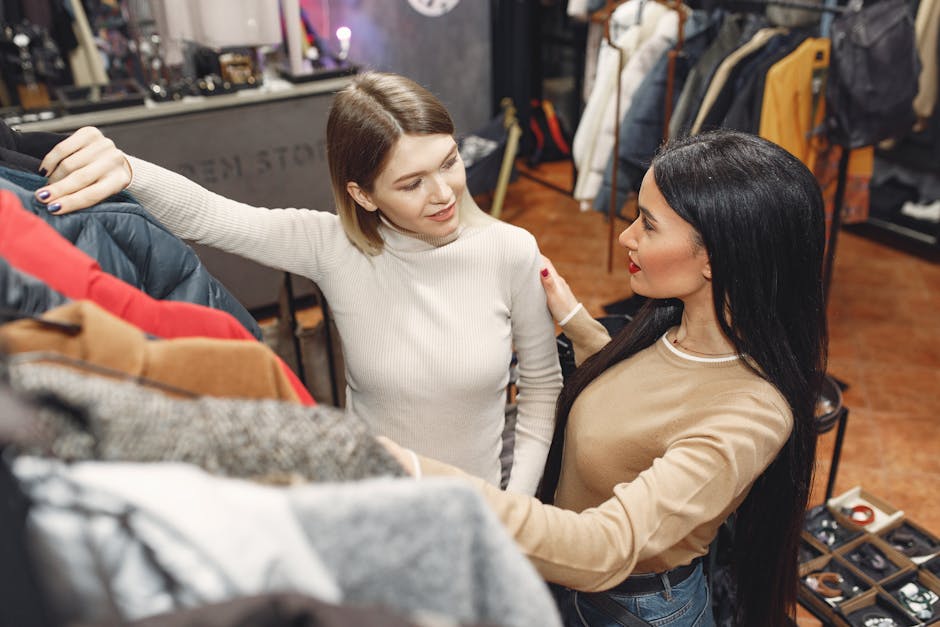
People buy things that don’t fit because they’re only $6. That is the entire problem. A blazer that gaps at the shoulders won’t get worn no matter what it cost, and it sits in your closet making you feel vaguely guilty every time you open the door. Buy a thrift piece only if it fits now, or if the alteration needed is simple — hemming, taking in a side seam. Never buy something that needs structural shoulder or bust work unless you have a tailor you already trust and a clear budget for it.
How Thrift Pieces Become Actual Outfits
The best thrift hauls aren’t random accumulations of things — they’re pieces that slot into what you already own and wear.
Start by identifying the three or four outfits you reach for on repeat. A thrift piece that integrates directly into one of those rotations will get worn constantly. A piece that requires you to build an entirely new outfit around it, from scratch, usually just hangs there.
Specific combinations that work with the most common thrift finds:
A vintage Levi’s 501 in a mid-wash pairs with almost any top. Tucked-in striped tee, white Oxford shirt, fitted ribbed tank — all of them work. The vintage wash does the styling work for you without any effort.
A thrifted wool blazer in navy or camel instantly elevates the simplest outfit. Wear it over a plain white tee and straight-leg jeans for a pulled-together look that cost under $15 in total thrift pieces. This combination works for coffee, errands, or a casual dinner.
Silk blouses — when you find one in good condition — are the single highest-leverage thrift item. They read expensive in a way that cotton and polyester never do, they layer under blazers or cardigans, and they work with denim, tailored trousers, or midi skirts equally well. A $9 Ann Taylor silk blouse styled with clean-cut trousers looks considerably more expensive than it is.
The mistake most people make at thrift stores: buying statement pieces before owning the basics that make them wearable. A sequined Anthropologie skirt is a great thrift find — if you already have a black turtleneck, clean ankle boots, and a simple bag to wear it with. Without the foundation, statement pieces stay on hangers.
The Strategy Behind a Productive Thrift Run
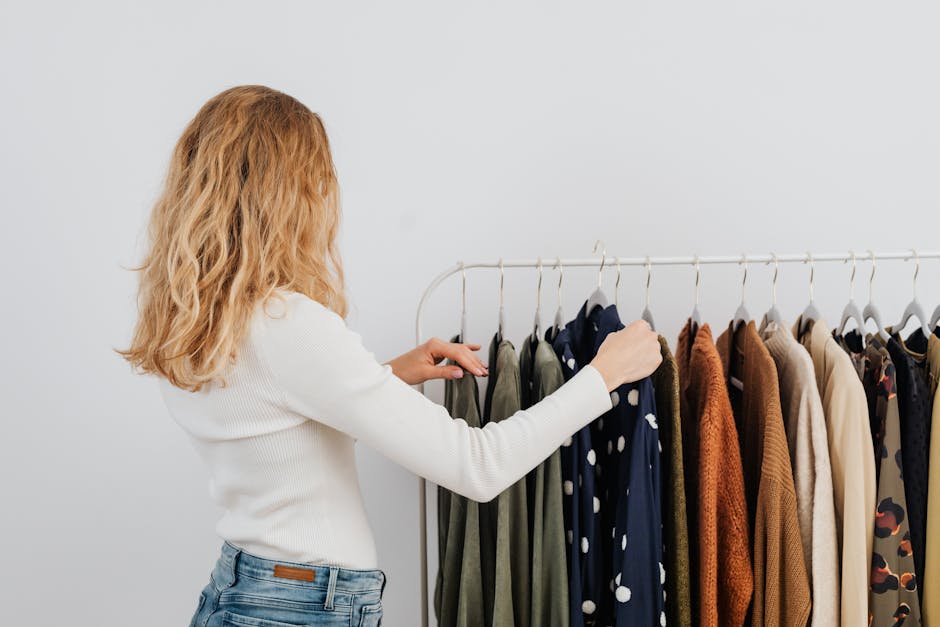
Random browsing produces random results. Going in with a system narrows the gap between good trips and wasted afternoons.
- Go on restock days. Most Goodwill locations restock Tuesday through Thursday. Weekends get picked over by Saturday afternoon. Call your specific location and ask when they put new donations on the floor — this single change dramatically improves find quality.
- Shop by size, not by color. Most racks are sorted by color, which looks approachable but is inefficient. If your store has size-sorted sections, start there. If not, scan quickly for construction quality — collar shape, jacket structure — before pulling anything off the rack.
- Bring your measurements. Vintage sizing runs small. A “Large” from the 1990s is closer to a modern Medium. Knowing your exact bust, waist, and hip measurements lets you evaluate fit without trying on thirty items.
- Check seams, not just surface. Flip pieces inside out. Look at stitching density and seam allowance. Good construction means tight stitches and generous seam allowance (room to alter). Fast fashion has the opposite — wide, loose stitches and almost no seam allowance.
- Walk in with a short list. Know you’re looking for a navy blazer, a pair of straight-leg trousers, or a silk top. You’ll find things you weren’t looking for — that’s the appeal — but the list keeps you from buying things that won’t integrate into real outfits.
- Set a price limit per item, not per trip. “I’ll spend $30 total” leads to buying three mediocre $10 items just to justify the trip. “Nothing over $15 unless it’s exceptional” is the better framework. It keeps quality higher and closet clutter lower.
Specific Situations, Answered Directly
Is thrift shopping worth it on a very tight budget?
Yes — with one condition. Only if you’re buying pieces that fit and that you’ll actually wear. A $4 item you never reach for cost you $4. A $12 Levi’s denim jacket you wear three times a week costs almost nothing per use. The budget math only works when the items work in your real wardrobe.
What’s the most underrated thrift category?
Structured blazers. A well-cut wool blazer in navy, camel, or grey is one of the most versatile pieces in any wardrobe, and they show up constantly at thrift stores because they don’t wear out and people donate them when their office dress codes change. J.Crew, Banana Republic, and Talbots blazers at $8–$15 deliver the best value-per-outfit-use of anything in the store.
How worn is too worn to buy?
Pilling on visible surfaces — chest, forearms, upper back — is a deal-breaker unless you already own a fabric shaver and will actually use it. Zipper failures are usually fixable for under $10 at a tailor. Missing buttons are easy to replace with a $3 card from a craft store. Stains in visible spots: don’t gamble on home stain removal unless you know exactly what caused the stain and have the right product for it. Unknown stains on visible fabric are a skip.
Online thrift or in-person — which is better for finding cute pieces?
Online wins for efficiency. ThredUp lets you filter by brand, size, color, and condition before seeing anything. Depop is unmatched for curated vintage. But in-person wins for fit, fabric feel, and the unexpected find that no algorithm would have surfaced. The ideal approach: use ThredUp to fill specific gaps (you need a cashmere sweater in XS, size Medium Levi’s 501s), and use physical stores for browsing and discovery.