

You put on a 16-inch chain, add a pendant, and leave the house feeling polished. Two hours later, every necklace has slipped toward the same side of your neck. The pendant is hidden, the clasps are twisted, and the fine chain is pulling against your collarbone.
That problem usually has less to do with the jewelry itself than with spacing, weight, and movement. A good stack creates visible levels. A bad one creates friction. The difference comes from a few measurable choices: chain length, chain width, pendant size, neckline shape, and the order in which you put everything on.
This guide focuses on the practical side of how to layer necklaces. The goal is a stack that looks intentional, remains comfortable for several hours, and does not force delicate pieces to carry more weight than they can handle.
Why Layered Necklaces Tangle in the First Place
Friction pulls chains into one knot
Necklaces tangle because they move across the same small area while your body moves underneath them. Walking, turning your head, taking off a sweater, and adjusting a handbag strap all create small changes in tension. Two chains with similar lengths often cross at the same point, so each movement gives them another chance to wrap around one another.
Fine chains are especially vulnerable. A narrow cable or box chain has less weight and less surface area than a thick curb chain, so it can shift quickly when a heavier pendant moves. A stack can look perfect in front of a mirror and still fail after a short walk.
Equal lengths hide the pieces
When two necklaces measure 16 inches, their clasps and pendants compete for the same space. The eye reads them as one crowded line. A gap of roughly 2 to 3 inches gives each layer its own visual position. For many necklines, a 16-inch chain, an 18-inch pendant, and a 22-inch longer chain create clearer separation than three chains placed at 16, 17, and 18 inches.
Weight changes the balance
A large pendant can pull a delicate chain forward while the chain behind it slides sideways. That is why a stack should build from light to heavy with care. Put the smallest, lightest piece closest to the neck. Place the bolder pendant lower, where it has more room to move without crushing the upper layers.
The practical verdict is simple: if your necklaces tangle every time, stop adding pieces first. Measure the lengths and remove the layer that sits in the same zone as another piece.
Which Necklace Lengths Create Clean Separation?
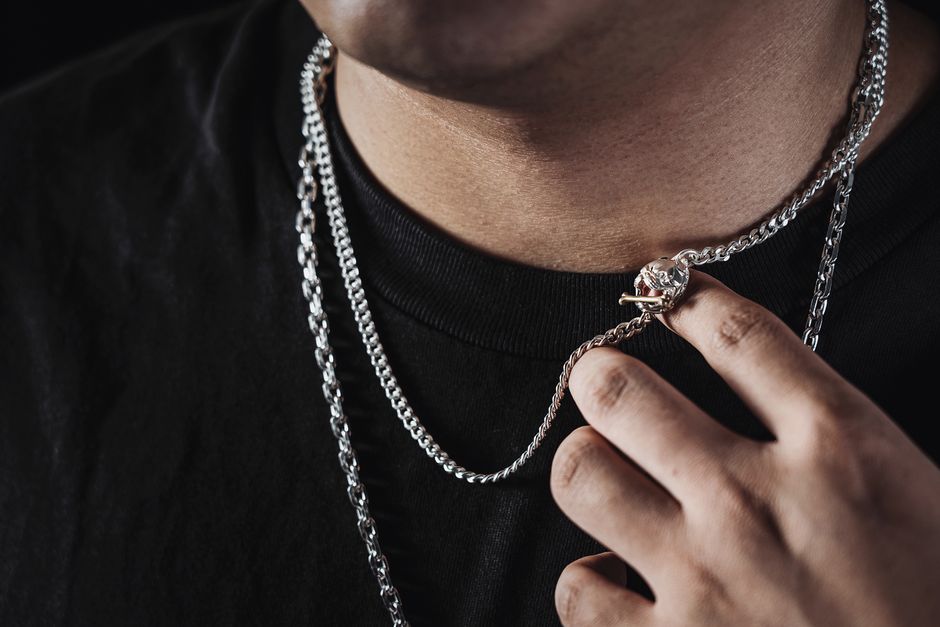
The most useful necklace stack is built around distance, not quantity. Three well-spaced pieces usually look more refined than five chains packed together. Use the following chart as a starting point, then adjust for your neck size, pendant depth, and neckline.
| Layer | Useful length | Best role | Common problem |
|---|---|---|---|
| Upper | 15–16 inches | Small chain, bead, or tiny charm | Disappears under a high neckline |
| Middle | 18–20 inches | Medium pendant or textured chain | Collides with the upper layer at 17 inches |
| Lower | 22–24 inches | Long pendant, bar, or bold link | Looks disconnected from a very open neckline |
Use two-inch gaps as your first test
Start with a two-inch difference between chain lengths. A 16-inch and an 18-inch necklace often work well for a simple two-piece stack. For three pieces, try 16, 20, and 24 inches if the pendants are small. If one necklace has a deep pendant, add more space below it rather than placing another pendant directly underneath.
Adjust for your neckline
A crew neck usually needs a shorter upper chain or a pendant that sits above the fabric. A V-neck gives the lower necklace a natural path and can handle a 20- to 24-inch chain. A square neckline looks balanced with a shorter chain that follows the horizontal edge, plus one pendant that drops into the open center.
Do not treat these measurements as a rigid uniform. The point is to keep the focal points apart. For a petite frame, reduce the overall spread. For a broad or long neckline, a wider gap prevents the stack from looking compressed.
The Three-Piece Formula That Works for Most Outfits
My preferred formula is one quiet chain, one recognizable pendant, and one lower texture. It gives the eye a starting point, a focal point, and a finishing line without making the outfit feel crowded.
Build the stack in this order
- Start with the smallest chain. Choose a 15- or 16-inch fine chain with no pendant or a charm under 10 millimeters. Its job is to frame the base of the neck, not compete with the main piece.
- Add the focal necklace. Use an 18- to 20-inch chain with a pendant between 12 and 25 millimeters. A round medallion, initial, bezel stone, or small religious charm can fill this role.
- Finish with texture. Choose a longer 22- to 24-inch chain with a paperclip, rope, snake, or slim curb pattern. Keep its pendant small if the middle necklace already has a strong focal point.
- Check the back before leaving. Place the clasps at the nape of your neck, then walk around for five minutes. If one chain has moved more than an inch, swap its position or change the length.
Real pieces that show the idea
Catbird Sweet Nothing Chain works well as the quiet upper layer because its fine 14k gold profile keeps the neckline light. The Mejuri 14k Gold Box Chain is a practical middle option when you want a clean geometric texture; select a length around 18 inches and confirm the listed width before ordering. For a lower layer, the Quince 14K Gold Rope Chain adds visible texture without requiring a large pendant.
For a lower-cost test stack, Missoma’s Fine Gold Chain can serve as the upper or middle layer, but check whether the current version is gold vermeil or plated material. That difference affects wear, cleaning, and water exposure. My clear pick for a first fine-jewelry stack is Catbird’s delicate chain, a medium-weight 14k gold pendant necklace, and a longer rope chain. The combination has enough contrast to look styled without forcing one thin chain to carry the entire design.
How Metal, Chain Weight, and Pendants Should Work Together

Mixing metals can look modern, but random mixing looks accidental. The safest approach is to choose one dominant metal and use the second metal as a small repeated accent. If two of your three necklaces are yellow gold, a small silver or white-gold detail can work. If every layer changes color, the eye loses the structure of the stack.
Compare the main chain types
| Chain type | Visual weight | Works best as | Watch for |
|---|---|---|---|
| Cable chain | Light | Upper layer or small pendant | Can disappear beside a heavy link |
| Box chain | Light to medium | Middle layer | Sharp edges may catch fine fabrics |
| Rope chain | Medium | Middle or lower layer | Texture can compete with a detailed pendant |
| Paperclip chain | Medium to heavy | Lower layer | Can overwhelm a narrow neckline |
| Snake chain | Medium | Single focal layer | Shows kinks when bent |
Match pendant size to chain strength
A pendant should not feel as if it is dragging the chain down. A 10- to 15-millimeter charm is usually comfortable on a fine chain. A wider pendant or a solid stone needs a stronger chain and a secure jump ring. Tiffany & Co. Elsa Peretti Open Heart pendants, for example, have enough visual presence to serve as the main layer rather than an extra charm buried among several other pendants.
My strongest recommendation is to put only one highly detailed pendant in a three-piece stack. Use plain chains around it. If you wear two detailed pendants, keep them at least four inches apart and vary their shapes. A round pendant over a vertical bar looks more deliberate than two round pendants hanging at nearly the same level.
Gold color also affects perceived weight. Yellow gold reads warmer and more visible against dark clothing. White gold and silver can look lighter against pale fabric. Rose gold adds contrast, but it needs a repeated accent elsewhere in the outfit to feel connected.
Questions That Solve Common Layering Problems
Why do my necklaces twist to the side?
Most side movement comes from an uneven weight distribution. A pendant may be pulling the front of the chain while the clasp sits at the back. A handbag strap, seat belt, or hair also adds friction on one shoulder. Try moving the heaviest pendant to the lowest layer, then use a slightly shorter chain above it. If the twist continues, separate the metals or textures. Similar chains can slide against each other more easily than chains with different surfaces.
Can I wear layered necklaces with a turtleneck?
Yes, but the stack needs to sit on top of the fabric rather than fight the collar. Use one shorter chain at 18 inches and one long pendant at 24 inches. Avoid three tiny chains because they will disappear into the knit. A thick sweater can support a paperclip or rope chain, while a thin jersey turtleneck usually looks better with two narrow chains and one modest pendant.
How do I stop fine jewelry from breaking?
Do not sleep, shower, swim, or exercise in a delicate layered stack. Sweat, water, and repeated pressure can dull surfaces and stress clasps. Remove the jewelry before pulling clothing over your head. Store each chain flat or in its own small pouch; throwing several chains into one jewelry tray creates knots before you wear them. Inspect the clasp and jump ring every few weeks. If a ring has opened slightly, stop wearing the necklace until a jeweler closes it.
When a stack keeps failing, the problem is usually mechanical rather than aesthetic. Reduce the number of layers, increase the length gap, and protect the thinnest chain from the heaviest pendant.
When You Should Skip a Necklace Stack

Skip layering when the outfit already has a strong focal point. A sequined neckline, sculptural collar, dramatic earrings, or heavily embellished dress may need open space around the face. Adding three necklaces can make the styling feel busy instead of finished.
Choose one necklace for high-impact clothing
Wear one substantial piece with a strapless gown, a beaded top, or a high-neck dress with strong shoulder detail. A single pendant can create a cleaner line than several small chains competing with the garment. For professional clothing, one 16- to 18-inch chain often looks more intentional than a stack that catches on a blazer lapel.
Choose a stack when the neckline gives it room
Layering earns its place with open shirts, scoop necks, simple crew necks, knit dresses, and plain tanks. The clothing provides a quiet background, so the lengths and textures can show. For daily wear, two layers are enough: a fine upper chain and a pendant or textured lower chain. Add a third only when the first two still have clear separation.
The most reliable 2026 approach is restrained rather than crowded: one fine chain, one clear focal pendant, and one longer texture, all spaced by at least two inches. That structure keeps the jewelry visible, reduces tangling, and leaves the clothes in control of the outfit.