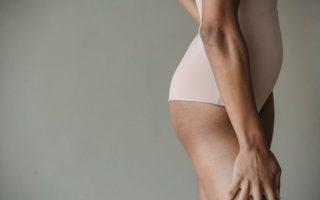

The dress looks perfect on the model, then arrives with a hem that cuts across the widest part of your calf, a waist that lands two inches too high, or a neckline that never sits flat. I have made all three mistakes. The right summer midi dress is not about hiding your body; it is about placing the hem, waist, and fabric where they create the cleanest line for your proportions.
Start With Proportion, Not a Body-Shape Label
Find the line your eye follows first
Body-shape labels can help, but they are not rules. Most people do not fit neatly into one category, and weight can shift between the bust, waist, hips, and thighs over time. The useful question is simpler: where does the dress create its strongest horizontal lines?
A midi dress usually has three of them. The neckline frames the chest and shoulders. The waist seam or belt creates the middle break. The hem ends somewhere on the lower leg. A dress looks balanced when those lines work with your natural proportions rather than cutting across them at random.
For a fuller bust, a V-neck or open square neck creates space above the waist. For a narrow shoulder line, a wider neckline, cap sleeve, or subtle shoulder detail adds visual width. For a longer torso, a true waist seam keeps the dress from looking stretched. For a shorter torso, a higher waist can make the legs appear longer, but an empire seam that sits directly beneath the bust often looks too fussy.
Use the hem as a styling tool
The safest midi hem ends at a narrow part of the leg, usually just below the knee or several inches above the ankle. A hem that lands at the widest part of the calf can make the leg look shorter, especially with flat shoes. If that is the only length offered, wear a shoe close to your skin tone or choose a sandal with a low, delicate strap.
My strongest rule is this: the waist and hem should not compete. A sharply defined waist with a heavy calf-length hem can make the lower half look dense. A softer waist with a clean, slightly shorter hem often creates a better result. For a balanced shape, the Reformation Frances Dress, usually priced around $248, works because its fitted waist and fluid skirt create one clear vertical line instead of several competing breaks.
Take These Measurements Before Ordering
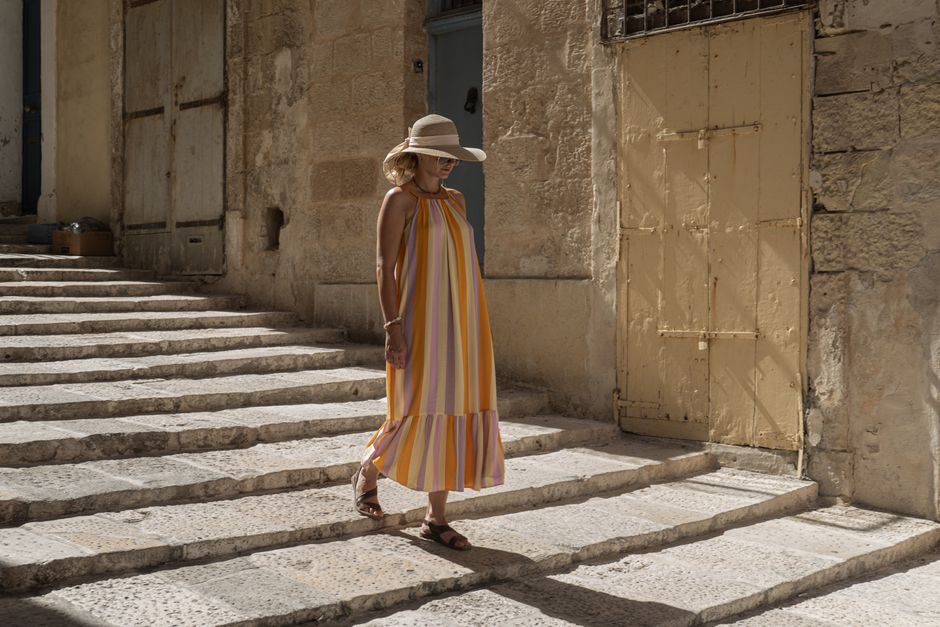
Measure the garment, not only your body
Your bust, waist, and hip measurements are useful, but the finished garment measurements tell you how the dress will actually sit. Measure while wearing the bra you plan to use with the dress. Keep the tape level and relaxed; pulling it tight produces a dress that looks correct on paper and feels restrictive after lunch.
For a fitted woven midi, add roughly 1 to 2 inches of ease at the bust and hips. A close-fitting knit can use less because the fabric stretches, while linen and cotton poplin need more room. If your largest measurement falls between sizes, choose the size that fits that area and plan for a small alteration at the smaller area. Taking in a side seam is easy. Adding fabric to a tight hip is not.
Check these five numbers on the product page
- Garment length: Measure from the highest shoulder point to the hem, then compare it with a dress you already like.
- Waist placement: Check the distance from shoulder to waist seam. A two-inch difference can change the whole shape.
- Fabric stretch: Look for elastane or a knit construction when you want movement through the hips.
- Lining length: A lining that stops several inches above the outer hem can create a sheer band around the legs.
- Strap adjustment: Adjustable straps help a short torso, fuller bust, or sloping shoulder more than a size change can.
Do not trust the word midi by itself. One brand’s midi may end at 46 inches and another’s at 52 inches. A 48-inch dress may hit below the knee on a petite frame but above the ankle on someone taller. The number matters more than the label.
Choose the Cut That Solves Your Main Fit Problem
My clear winner for most body types is a soft A-line midi with a defined but comfortable waist. It gives the bust and hips room, keeps the center line visible, and does not require shapewear to hang properly. The best cut, however, still depends on the problem you are trying to solve.
For a fuller bust or straighter waist
Choose a wrap front, V-neck, or princess seam. These details create a diagonal or vertical line instead of adding bulk across the chest. A true wrap dress also gives you control over the waist, which helps when your bust and waist measurements do not match one standard size chart.
The Boden Linen Midi Dress, often listed near $198, is a useful reference because linen gives the skirt structure while the waist remains relaxed. Pick it for warm daytime events when you want shape without a close fit. Avoid a high crew neck with a wide gathered bust if you already feel crowded through the chest; the extra fabric can make the top look larger and the waist look smaller by contrast.
For fuller hips, thighs, or a lower stomach
A-line and fit-and-flare skirts are the easiest choices. Look for a seam that begins at the natural waist and a skirt that falls away from the body rather than clinging at the hip. A side slit can improve walking comfort, but a slit that begins at mid-thigh changes the dress from easy daywear to a more exposed style.
The Quince Washable Stretch Silk Midi Dress, usually around $99.90, suits people who want a smooth drape and minimal bulk. Its light fabric is best with a lining or slip underneath. Do not buy it for a beach walk if you dislike cling; silk follows the body more closely than linen or cotton.
For a short torso or shorter height
Try a raised waist, narrow shoulder straps, and a hem that sits closer to the knee than the ankle. A monochrome shoe and dress combination also keeps the leg line intact. Avoid a wide belt placed low on the hips, which creates a second horizontal line and makes the torso look longer.
Fabric and Details Decide How the Dress Behaves
Match the fabric to the heat and the setting
Fabric changes the fit after the first hour. Linen breathes well and looks relaxed, but it wrinkles and can pull across the hips if the cut is too close. Cotton poplin holds an A-line shape and works well for office days, but it may feel stiff in a tight bodice. Viscose and rayon drape beautifully and resist the tent effect, yet they can cling to perspiration and often need careful washing. Silk feels cool and polished but needs more care than most summer wardrobes allow.
For a hot commute, I prefer a cotton-linen blend with a lined bodice and an unlined skirt. For a dinner dress, a viscose crepe or washable silk gives a better fall. For travel, the Quince dress is more practical than a delicate linen style if you can wash it by hand and hang it overnight. Fabric choice should follow the day you will spend in the dress, not only the fitting-room mirror.
Reject details that create work
Buttons that gape at the bust, a zipper that catches at the waist, and a lining that twists are not small flaws. They make a dress hard to wear. Check the button spacing, sit down in the dress, raise both arms, and walk ten steps. If the skirt rides upward or the armholes cut in, the problem will become worse in heat.
Avoid very thin pale fabric unless the dress includes a reliable lining. Nude underwear does not fix a transparent white skirt when the fabric is thin enough to show its edge. Also skip large ruffles at the hip if your goal is a long, clean line. They add width exactly where the dress already needs room.
Common Midi-Dress Mistakes and the Fix
What usually goes wrong
- Buying by size number: A size 8 in one brand can have the bust of a size 6 and the hip of a size 10 elsewhere. Use measurements.
- Ignoring the back view: A dress can look polished from the front while the back waist rides upward. Check side and rear photos.
- Choosing the longest hem: Extra length does not always look more elegant. It can shorten the leg when it ends on the calf.
- Using a belt to rescue a bad waist: A belt can define a loose dress, but it cannot fix a seam that sits far above or below your natural waist.
- Testing only while standing: Sit, bend, reach, and walk. Summer clothing needs to work outside the fitting room.
When not to buy the dress
Do not buy a midi because the sale price feels too good to miss. Leave it behind if the bust pulls, the waist seam cuts into your ribs, or the fabric needs constant adjusting. A discounted dress that stays in the closet costs more than a full-price dress you wear twice a week.
Skip the A-line cut when you want a sharp, minimal silhouette and already own several flowing dresses. Choose a column dress with stretch instead. Skip linen when you need a crisp look from morning to evening. Choose cotton poplin or a wrinkle-resistant viscose blend. The right alternative is often more useful than forcing a popular cut to solve the wrong problem.
Quick Picks by Body Proportion and Occasion

My short verdict
For the most forgiving everyday fit, buy a soft A-line midi with a natural waist. For a fuller bust, choose a wrap or V-neck. For a petite frame, shorten the hem to the narrow part of the leg. For a summer wedding, choose fluid viscose or silk and keep the accessories simple. The dress should make movement easier, not give you another task to manage.
Use this comparison before checkout
| Fit goal | Best dress shape | Best fabric | Strong choice |
|---|---|---|---|
| Fuller bust | Wrap or open V-neck | Viscose crepe | Reformation Frances Dress, about $248 |
| Fuller hips | Natural-waist A-line | Cotton-linen blend | Boden Linen Midi Dress, about $198 |
| Short torso | Raised waist with narrow straps | Light cotton or rayon | Quince Washable Stretch Silk Midi Dress, about $99.90 |
| Hot commute | Relaxed fit-and-flare | Linen or cotton poplin | Choose breathability over cling |
| Polished dinner | Column or softly draped midi | Silk or viscose | Choose a lined skirt and hidden zipper |
The best summer midi dress for your body type is the one that puts the waist at the right height, ends at a useful point on the leg, and survives a full day of sitting, walking, and heat. Start with those three tests, then choose color and trend details. Fit earns the repeat wears; styling only gets the first compliment.