In 2026, the Korean second hand fashion market hit 20 trillion won (about $15 billion USD). That’s larger than the entire fast fashion sector in South Korea. But here’s the catch: roughly 35% of items listed on major C2C platforms are counterfeit or misrepresented. Buyers lose money every day because they don’t know how the system actually works.
This guide lays out exactly how to buy second hand clothing in Korea — which platforms are trustworthy, what prices you should expect, and how to spot a fake before you pay. This is not legal advice. Consult a licensed attorney if you have a dispute over a purchase.
Why the Korean Second Hand Market Is Different From Western Thrifting
If you’ve thrifted in the US or Europe, you’re used to bins of unsorted clothes, Goodwill pricing, and the occasional designer find for $5. Korea’s market works differently at the fundamental level.
Korea has a dense population with limited closet space. Most people live in apartments under 800 square feet. That forces constant wardrobe rotation. Items get sold after one season — sometimes after one wear. The result: a massive supply of nearly-new clothing at 30-70% off retail. But the curation is different.
Three structural differences matter:
- Condition grading is standardized. Korean platforms use a 4-tier system: S (new with tags), A (worn 1-3 times, no flaws), B (visible wear but clean), C (damaged or stained). Always check the grade before buying.
- Counterfeit enforcement is weak on C2C apps. Unlike Japan, where replica sales carry criminal penalties, Korea’s laws are civil. That means fakes are common on unregulated platforms.
- International shipping is complicated. Most sellers won’t ship abroad. You need a Korean address or a forwarding service like Malltail or Korgou.
If you’re a foreign buyer without a Korean friend or address, your options shrink to three platforms. We’ll cover those next.
The 4 Platforms You Can Actually Use as a Foreign Buyer
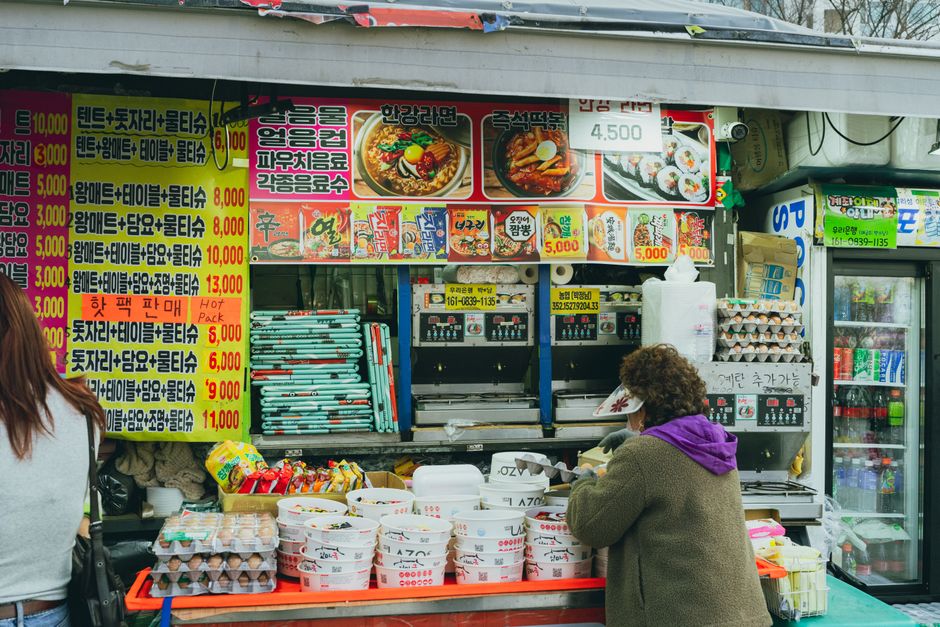
Not all Korean second hand platforms allow foreign registration or international shipping. Here’s the breakdown of what works and what doesn’t.
| Platform | Foreign Registration | International Shipping | Best For | Typical Price Range |
|---|---|---|---|---|
| Bungaejangter | Yes (passport required) | No (use forwarding service) | Designer brands, luxury bags | $50 – $500 |
| Joonggonara | No (Korean phone number needed) | No | Everyday clothing, electronics | $10 – $100 |
| Goto Mall | Yes (email signup) | Yes (built-in) | Trendy Korean brands, streetwear | $15 – $80 |
| The Seoul Flea Market (Instagram-based) | Yes (DM the seller) | Depends on seller | Vintage, handmade, one-off pieces | $20 – $150 |
Bungaejangter is the safest option for high-value items. They have a buyer protection escrow system: your money is held until you confirm receipt. Joonggonara is the largest marketplace but nearly impossible to use without a Korean phone number and bank account. Skip it unless you live in Korea.
Goto Mall is the easiest entry point. It’s a curated marketplace — sellers pay to list, so there’s less junk. They offer international shipping directly, but you pay 15,000-25,000 won ($11-$19) for shipping to the US.
Instagram sellers are a gamble. No buyer protection. Pay via PayPal Goods and Services only, never Friends and Family. If a seller demands crypto or wire transfer, walk away.
How to Verify Authenticity: The 3-Step Check That Works Every Time
Fakes are the number one complaint on Korean second hand platforms. Here’s how to catch them before you pay.
Step 1: Check the stitching on the care label. Korean counterfeiters almost always mess this up. Genuine Korean brands (like Gentle Monster, ADER Error, or Andersson Bell) use a specific double-stitch pattern on the inner care tag. Counterfeits use a single loose stitch. Ask the seller for a photo of the care tag flipped over. If they refuse, that’s a red flag.
Step 2: Cross-reference the serial number. For luxury items (Chanel, Gucci, Prada), Korean second hand platforms require a serial number in the listing. Take that number and run it through Entrupy or LegitGrails. Those services cost $5-$15 per check but save you from a $300 mistake. Most Korean sellers accept returns if the item fails authentication — but only if you check within 7 days.
Step 3: Compare the weight. Counterfeiters use cheaper fabrics. A genuine Acne Studios wool coat weighs about 1.2kg. A fake version weighs 0.7kg. Ask the seller to weigh the item on a kitchen scale and send a photo. If they won’t, assume it’s a fake.
One more thing: never trust “100% authentic” in the listing title. Every fake listing says that. Trust the photos of the serial number and care label, not the text.
What Prices Should You Expect? A Realistic Breakdown by Category
Korean second hand prices are not Western thrift store prices. You won’t find a designer bag for $20. Here’s what actual sold prices look like on Bungaejangter and Goto Mall as of early 2026.
- Korean brand T-shirts (thisisneverthat, LMC, COVERNAT): $15-$30 for A-grade, $5-$10 for B-grade
- Korean brand denim (POST ARCHIVE FACTION, BLUE ELEPHANT): $40-$80 for A-grade, $20-$40 for B-grade
- Outerwear (Andersson Bell, SYSTEM): $80-$200 for A-grade, $40-$100 for B-grade
- Luxury bags (Chanel, Louis Vuitton): $300-$1,500 depending on condition and model
- Vintage American workwear (Levi’s, Carhartt): $50-$150 — Korean sellers know the Western vintage market prices
- Korean streetwear sneakers (New Balance 993, Asics Gel-Kayano 14): $60-$120 for used pairs in good condition
If a price seems too good to be true, it is. A Bungaejangter listing for a “Chanel Classic Flap Bag” at $200 is 100% counterfeit. Report it.
Failure Modes: The 4 Most Common Ways Foreign Buyers Lose Money
I’ve seen these mistakes repeatedly in online communities. Here they are so you don’t make them.
Mistake 1: Paying via wire transfer. Korean platforms like Bungaejangter offer escrow. Use it. Sellers who insist on bank transfer or KakaoPay direct are usually scammers. Once the money leaves your account, it’s gone. No chargeback possible.
Mistake 2: Not checking the grade. A seller lists a coat as “A-grade” but the photos show pilling on the sleeves. That’s B-grade at best. Korean grading is standardized, but some sellers inflate it. Ask for close-up photos of wear points: cuffs, collar, underarms.
Mistake 3: Buying without measurements. Korean sizing runs small. A size “L” in a Korean brand fits like a US “M” or sometimes “S.” Always ask for pit-to-pit and shoulder measurements in centimeters. If the seller can’t provide them, move on.
Mistake 4: Ignoring customs duties. If you ship to the US, items over $800 in value get hit with 3-16% duty depending on the fabric and origin. Korea-US FTA means no duty on most clothing under $800, but check the Harmonized Tariff Schedule for your specific item. A $1,200 Chanel bag will cost you about $60-$100 in duties.
When You Should NOT Buy Second Hand Clothing From Korea
Second hand isn’t always the right move. Here are three situations where buying new or skipping Korea entirely makes more sense.
Situation 1: You want fast fashion basics. H&M, Zara, and Uniqlo items sell for $10-$15 used in Korea. You can buy them new for $15-$25. The savings aren’t worth the shipping cost and risk. Skip second hand for anything under $30 retail.
Situation 2: You need a specific size in a rare item. Korean second hand stock is unpredictable. If you need a size 42 European shoe or a US size 12 dress, you’ll wait months for the right listing. Buy new from a brand that stocks your size directly.
Situation 3: You’re buying for the first time and don’t know your Korean size. Ordering blind is a recipe for returns you can’t make. Go to a Korean brand store in your country first, try things on, note your size in centimeters, then shop second hand. Without that baseline, you’ll waste money on clothes that don’t fit.
The alternative: if you want Korean fashion without the hassle, buy directly from brands like MUSINSA or W Concept during their seasonal sales. You pay more but get new items with easy returns.
Your First Purchase: A Step-by-Step Walkthrough
Let’s say you want to buy a used thisisneverthat sweatshirt on Goto Mall. Here’s exactly what to do.
Step 1: Create an account. Go to Goto Mall’s website. Sign up with your email. No Korean phone number needed. Verify via email.
Step 2: Search with Korean keywords. Use “thisisneverthat 맨투맨” (sweatshirt) instead of English. Korean sellers mostly write in Korean. Google Translate works for reading descriptions.
Step 3: Filter by grade. Set the grade filter to “A” or “S.” Skip “B” unless you’re okay with minor stains or pilling.
Step 4: Check the photos. Look for the care tag photo and the brand tag. If the listing has only stock photos from the brand’s website, the seller might not have the actual item. Request real photos via the platform’s chat function.
Step 5: Ask for measurements. Message the seller: “가슴단면과 총장 측정 부탁드립니다” (Please provide chest width and total length). A legitimate seller will respond within 24 hours with photos of a measuring tape on the garment.
Step 6: Pay via platform payment. Use credit card or PayPal through Goto Mall’s checkout. Never pay outside the platform.
Step 7: Ship to your forwarding address. If you’re using a service like Malltail, enter their Korean warehouse address as the shipping address. Then pay Malltail to forward it to your country. Total shipping: about $15-$30 depending on weight.
Step 8: Inspect immediately upon arrival. You have 7 days from delivery to file a dispute. Take photos of the item next to the listing photos. If it doesn’t match, open a dispute on the platform.
That sweatshirt costs about $120 new. You’ll pay $35 used plus $20 shipping. Total: $55. You saved $65. That’s the real value of Korean second hand — not $5 thrift store prices, but 50-60% off premium Korean brands that rarely go on sale.