
Softness lies. Many people dealing with the sharp, grinding discomfort of knee osteoarthritis assume that the solution is to find the softest, most pillowy shoe available. It seems logical. If the joint hurts when it hits the ground, put a cloud under it. However, biomechanical research often indicates the opposite. Overly compliant midsoles can destabilize the foot, forcing the knee to work harder to maintain balance, which potentially increases the mechanical load on the damaged cartilage. The search for the best shoes for knee arthritis requires a shift from seeking mere comfort to understanding structural support and gait mechanics.
Why Maximal Cushioning Isn’t Always the Answer for Knee Pain
The primary misconception in orthopedic footwear is that more foam equals less pain. While a certain level of shock absorption is necessary to mitigate the impact forces of walking on concrete, the density of that foam matters more than the volume. When a shoe is too soft, the foot sinks in unevenly. This instability travels upward, manifesting as increased lateral or medial torque at the knee joint. This torque, often measured as the Knee Adduction Moment (KAM), is a significant predictor of how quickly arthritis progresses in the medial (inner) compartment of the knee.
Data from gait analysis labs suggests that a firmer, more responsive midsole often provides a more stable platform. This stability prevents the foot from over-pronating or over-supinating, both of which can pull the knee out of its optimal tracking alignment. A shoe that feels ‘stiff’ in the store might actually be the very tool that reduces the micro-oscillations that irritate an arthritic joint. We must look at the durometer—the measure of a material’s hardness—rather than just the stack height.
Furthermore, proprioception—your brain’s ability to sense where your joints are in space—is dampened by thick, mushy soles. When you lose that ground feel, your muscles may not fire with the correct timing to protect the knee joint during the stance phase of your stride. Therefore, the ideal shoe provides enough dampening to take the ‘edge’ off the impact without sacrificing the structural integrity of the shoe’s base.
Critical Design Elements: Rocker Bottoms vs. Neutral Platforms
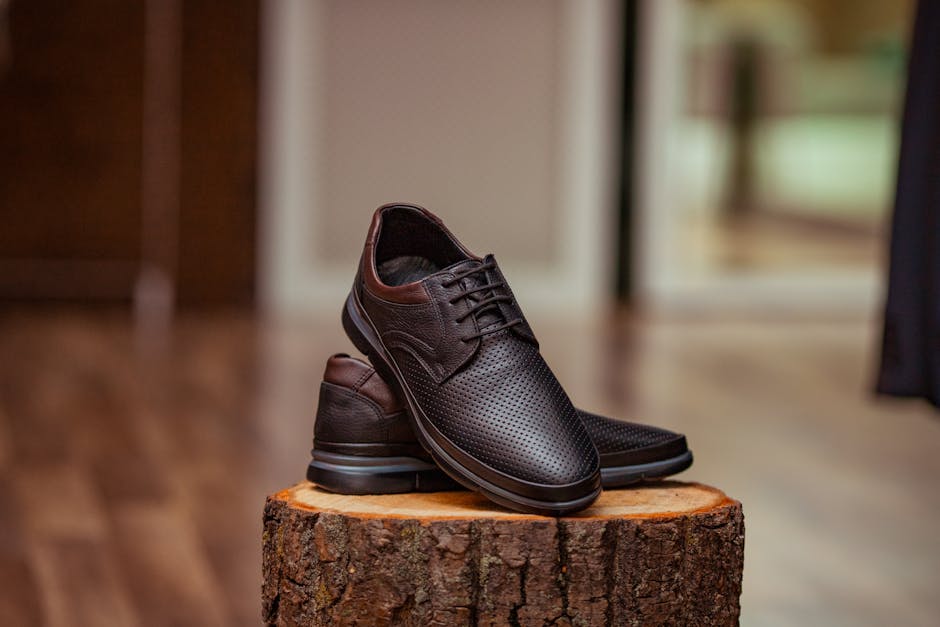
When analyzing footwear for joint preservation, two specific geometries dominate the conversation: the rocker sole and the neutral, stable platform. These designs aim to solve different mechanical issues associated with knee degeneration.
The Mechanics of the Rocker Sole
A rocker bottom shoe features a curved sole that mimics the natural roll of the foot. By facilitating a smoother transition from heel-strike to toe-off, these shoes reduce the amount of work the ankle and knee must perform. For an individual with knee arthritis, a rocker sole can decrease the force required to propel the body forward. This is particularly beneficial for those with limited range of motion. Brands like Hoka and MBT have pioneered this ‘meta-rocker’ geometry, which effectively ‘rolls’ the wearer through their step, minimizing the peak impact point.
Stability and Torsional Rigidity
Torsional rigidity refers to how much the shoe resists twisting. If you can pick up a shoe and easily wring it like a towel, it lacks the necessary support for an arthritic knee. A stable shoe should have a wide ‘footprint’ or base. This wider flare at the heel and forefoot provides a larger surface area for weight distribution, reducing pressure points. Stability features, such as a medial post or a guide rail system, can help keep the knee in a neutral plane, preventing the inward collapse that stresses the medial meniscus.
Upper Construction and Lockdown
The part of the shoe that wraps around the top of your foot—the upper—is often overlooked. For those with arthritis, a secure ‘lockdown’ is vital. If the foot slides around inside the shoe, the knee must compensate for that lack of security. Look for structured heel counters (the stiff back part of the shoe) that hold the calcaneus in place. A well-designed upper ensures that the foot and the midsole move as a single unit, reducing shearing forces on the knee.
Comprehensive Review of 2024’s Leading Shoes for Arthritis
The following models have been selected based on their mechanical profiles, material durability, and clinical relevance to knee joint loading. Prices are approximate and may vary by retailer.
| Model Name | Approx. Price | Heel-to-Toe Drop | Primary Benefit |
|---|---|---|---|
| Hoka Bondi 8 | $165 | 4mm | Maximum impact dampening with rocker geometry |
| Brooks Ghost 16 | $140 | 12mm | Neutral stability with high heel-to-toe offset |
| New Balance Fresh Foam X 1080v13 | $165 | 6mm | Premium foam with a wider base for stability |
| ASICS Gel-Kayano 30 | $160 | 10mm | Structured support for overpronation |
| Skechers Arch Fit 2.0 | $90 | Variable | Podiatrist-certified arch support at a lower price point |
Hoka Bondi 8: The Maximalist Benchmark
The Hoka Bondi 8 is frequently cited by specialists for its extreme stack height. However, the real value lies in its early-stage meta-rocker. Pros: Excellent for those with lateral compartment arthritis who need a wide, stable base. The foam is dense enough to prevent ‘bottoming out.’ Cons: The high stack height can feel disconnected from the ground, which may be unsettling for individuals with balance issues. It is a bulky shoe that may not fit all aesthetic preferences.
Brooks Ghost 16: The Reliable Neutral
Brooks has maintained the Ghost line as a ‘gold standard’ for neutral walkers and runners. The 16th iteration uses DNA Loft v3 foam. Pros: The 12mm drop is excellent for those who also suffer from Achilles tendonitis or tight calves, as it offloads the posterior chain. Cons: It lacks a significant rocker, meaning the wearer must do more of the work during toe-off compared to a Hoka. The transition is traditional, not assisted.
New Balance Fresh Foam X 1080v13: The Versatile Daily Driver
The 1080v13 balances soft landings with a surprisingly energetic rebound. Pros: The upper is made of a breathable, stretchy knit that accommodates bunions or swelling, common comorbidities with arthritis. Cons: The 6mm drop is a middle-ground that might not provide enough relief for those specifically needing high-heel lift. Some users find the foam loses its ‘pop’ after 300 miles.
Understanding Heel-to-Toe Drop and Its Impact on Joint Loading
The ‘drop’ of a shoe is the difference in height between the heel and the forefoot. This measurement is measured in millimeters and significantly alters how forces are distributed through the lower extremities. Most standard sneakers have a drop of 10mm to 12mm. Low-drop shoes range from 0mm to 5mm.
Research indicates that a higher heel-to-toe drop (10mm+) tends to shift the mechanical load away from the foot and ankle and toward the knee and hip. Conversely, a lower drop (under 6mm) shifts the load down toward the calf and Achilles tendon. For someone with knee arthritis, one might assume a low drop is always better. However, this is a nuanced area. If a patient has limited ankle dorsiflexion—meaning they can’t easily pull their toes toward their shins—a low-drop shoe can actually cause them to lean forward, putting more pressure on the patellofemoral (kneecap) joint.
A moderate drop of 4mm to 8mm is often the ‘sweet spot’ for knee arthritis. It provides enough lift to assist with gait without aggressively forcing the knee to absorb the majority of the strike energy. Clinical observation suggests that the best drop for an individual often depends on their specific ‘wear pattern’ within the knee. Those with patellofemoral pain often prefer a lower drop, while those with deep joint space narrowing in the main tibiofemoral joint may benefit from the mechanical assistance of a slightly higher heel.
“The goal of footwear in arthritis management is not to eliminate impact, but to manage the direction and magnitude of that impact. A few millimeters of foam or a slight change in sole curvature can be the difference between a 20-minute walk and a 60-minute walk.”
The Lifespan of Midsole Foam: When to Replace Your Shoes
A common mistake is wearing shoes until the tread is gone. For an arthritic knee, the shoe is ‘dead’ long before the rubber on the bottom wears through. The midsole foam—usually Ethylene Vinyl Acetate (EVA) or a Polyurethane (PU) blend—undergoes a process called ‘compression set.’ Over time, the microscopic air bubbles within the foam collapse. Once they collapse, they no longer provide shock absorption or energy return.
For most high-quality walking shoes, the functional lifespan is between 300 and 500 miles. For a person walking 10,000 steps a day, this can be as little as four to six months. You can test for compression set by looking at the side of the midsole. If you see deep, permanent wrinkles in the foam even when you aren’t wearing the shoe, the material has likely reached its limit. Another sign is uneven wear on the outsole; if the heel is ground down on one side, the shoe is now actively pulling your knee into a malaligned position every time you step.
Rotating between two different pairs of shoes can extend the life of the foam. This allows the cells in the midsole to fully decompress between uses. It also varies the stress on your joints slightly, preventing the repetitive strain that comes from using the exact same mechanical tool every single day. While it requires a higher upfront investment, the long-term benefit to joint preservation is documented.
Beyond the Shoe: Orthotics and Gait Modification Strategies
While the shoe provides the foundation, it is not always the complete solution. For many with medial compartment knee osteoarthritis, a lateral wedge insole can be a powerful adjunct. This is a small insert that is thicker on the outer edge of the foot than the inner edge. It works by shifting the center of pressure outward, which in turn reduces the ‘lever arm’ that creates the knee adduction moment. Effectively, it ‘opens up’ the inner part of the knee joint.
Custom vs. Over-the-Counter Insoles
Not everyone needs a $500 custom orthotic. Many over-the-counter (OTC) options, such as those from Superfeet or Powerstep, provide enough longitudinal arch support to stabilize the foot. The key is to ensure the insole doesn’t make the shoe too tight. A shoe that is too tight can cause nerve compression or restrict the natural expansion of the foot during impact. Always remove the factory liner before inserting a third-party orthotic to maintain the proper internal volume of the shoe.
The Importance of Surface and Pace
Even the best shoes cannot fully compensate for poor walking surfaces. Concrete is roughly ten times harder than asphalt, and asphalt is significantly harder than a groomed trail or synthetic track. Whenever possible, choose softer surfaces to reduce the baseline impact. Additionally, shortening your stride can help. A shorter stride usually results in a midfoot strike rather than a heavy heel strike, which naturally reduces the peak force transmitted to the knee. By combining the right footwear with these behavioral changes, managing knee arthritis becomes a proactive process rather than a reactive struggle. The evidence remains clear: the right tool for the job makes the job significantly easier on the body.