What Do Scarves and Belts Actually Change?
Have you ever put on a white T-shirt, straight-leg jeans, and clean shoes, then felt the outfit looked unfinished? The clothes are not always the problem. A simple outfit often needs one clear visual anchor, and scarves and belts can create it without adding another complicated layer.
A scarf changes the eye line
A scarf adds color, movement, and a point of interest near the face. That matters because the eye usually reads an outfit from the face downward. A square scarf tied at the neck makes a plain crew-neck top feel sharper. A long scarf left loose creates vertical lines, which can make a bulky sweater or oversized shirt look less wide. The fabric also changes the mood: silk feels polished, cotton feels relaxed, and wool makes a basic coat look considered. My preference is a patterned scarf with two colors already found in the outfit. It looks intentional without demanding a full color-matching exercise.
A belt changes proportion
A belt does more than hold up trousers. It separates the upper and lower halves of the outfit and tells the eye where the waist sits. On jeans, a medium-width leather belt adds structure. Over a loose shirt dress, a wider belt creates shape. On a blazer, a slim belt can stop the jacket from swallowing the body. The strongest combination is usually one scarf for color and one belt for shape, with neither accessory trying to be the star.
| Accessory | Main job | Best simple outfit |
|---|---|---|
| Square scarf | Adds color near the face | T-shirt, shirt, or plain knit |
| Long scarf | Adds movement and length | Coat, cardigan, or oversized jacket |
| Medium belt | Defines the waist or waistband | Jeans, trousers, or a midi skirt |
| Wide belt | Creates a strong shape | Shirt dress or relaxed blazer |
How to Choose the Right Scarf Shape
The scarf shape decides how many styling options you actually get. I used to buy pretty prints first and think about size later. That was backwards. A scarf that is too small cannot sit neatly at the neck, while one that is too large can overwhelm a short jacket. Start with the way you plan to wear it, then choose the fabric and print.
Start with a 35-inch square
A square measuring roughly 35 inches by 35 inches is the most useful first scarf. Fold it into a triangle for a relaxed neck tie, roll it into a narrow band for a headband, or knot it through a belt loop. A silk twill square has enough body to hold a knot and enough softness to sit close to the neck. For a first purchase, I would choose a print with a quiet border and three main colors rather than a logo-heavy design. The border remains visible after folding, which makes even a basic knot look finished.
Use length for casual outfits
A skinny or oblong scarf works best when you want a slim line rather than volume. Wear it under an open collar, tie it once at the throat, or let it hang from a handbag handle. Use this quick selection method:
- Choose a 35-inch square for neck, hair, and bag styling.
- Choose a skinny scarf for a narrow collar or lightweight blouse.
- Choose a long scarf for coats and jackets that need vertical movement.
- Choose cotton or modal when you dislike silk slipping during the day.
- Skip very thick scarves with high-neck sweaters unless you want a deliberately layered look.
The clear winner for a small wardrobe is the square scarf. It gives you more ways to wear one purchase and works across casual, office, and dinner outfits.
Why Belt Placement Matters More Than Belt Price
Belt placement matters more than belt price. A $40 belt in the right position will improve an outfit more than a $200 belt sitting too low or cutting across the wrong part of the body. After years of wearing belts with denim, trousers, skirts, and dresses, I now treat the belt as a line-drawing tool. It should either finish the waistband or create a deliberate waist. A belt that does neither usually looks accidental.
Match the width to the garment
For jeans and tailored trousers, choose a belt between 1 and 1.5 inches wide. That range fits most belt loops and gives enough visual weight to balance denim or wool. A belt under 1 inch looks refined with dress trousers, but it can disappear on thick jeans. Belts around 2 inches wide work over dresses, coats, and long cardigans, where there are no loops forcing the proportion. Do not squeeze a wide belt through narrow loops; the leather will buckle and the outfit will look strained.
Place the waist with intention
Wear a loop belt at the natural waistband when you want a clean, practical finish. Wear a wider belt slightly above the natural waist over a dress when the skirt falls away from the body. On a blazer, fasten it where the jacket already narrows, not at the widest part of the torso. The buckle should sit flat, and the tail should pass through one keeper without a large fold. I also match the belt finish to the outfit mood: smooth black leather reads sharper, brown leather reads softer, and a sculptural buckle becomes the main accessory. If the buckle is bold, keep the scarf print quieter.
My strongest buying rule is simple: buy the belt that works with your most-worn trousers first. A beautiful belt that only works over one dress is a special-occasion accessory, not a wardrobe workhorse.
Which Scarf and Belt Buys Are Worth the Money?
You do not need luxury accessories to make a plain outfit look polished. I would spend first on useful dimensions, a comfortable finish, and a color you can wear at least twice a week. Prices below are practical reference points, since sales and stock can change.
Best budget and mid-range choices
The UNIQLO 100% Silk Scarf in a checked print has been listed around $9.90 on sale, making it the easiest low-risk way to try a square scarf. For a more substantial print, the J.Crew Printed Silk Scarf has been listed at $79.50, with a skinny striped version around $49.50. My value pick is UNIQLO for beginners and J.Crew for someone who already knows they wear scarves often.
| Product | Reference price | Useful detail | My verdict |
|---|---|---|---|
| UNIQLO 100% Silk Scarf | $9.90 sale | Checked silk square | Best first experiment |
| J.Crew Printed Silk Scarf | $79.50 | Patterned silk | Best everyday print |
| Echo Sea Treasures Silk Twill Scarf | $159 | 35 x 35 inches, 100% silk | Best polished statement |
| Madewell The Everyday Belt in Leather | $68 | Simple leather finish | Best daily belt |
| Polo Ralph Lauren Italian Saddle Leather Belt | $80 | Italian saddle leather | Best softer brown option |
When a higher price makes sense
The Echo Sea Treasures Silk Twill Scarf costs around $159 and measures 35 by 35 inches. It makes sense when you want a strong print that can carry a plain navy coat or cream sweater. For belts, the Madewell The Everyday Belt in Leather at about $68 is my practical winner because its simple shape will not date quickly. Choose the Polo Ralph Lauren Italian Saddle Leather Belt at about $80 instead if warm brown leather suits most of your shoes and bags. I would not buy the $159 scarf as a first purchase if you are still learning knots; start with the inexpensive square, then spend more on a print you know you will wear.
How Do You Combine Color Without Looking Overdone?
The easiest color rule is to repeat one accessory color once and let the rest stay quiet. You do not need the scarf, belt, shoes, and bag to match exactly. That creates a costume effect. Use one repeated shade, one neutral, and one small contrast.
Should the scarf match the belt?
No. The scarf and belt should belong to the same outfit, not look like a set. With dark denim, try a cream shirt, a rust-and-navy scarf, and a medium brown belt. The scarf supplies color while the belt connects to the shoes. With black trousers, a burgundy scarf and black belt are enough. My favorite low-effort combination is a blue-and-cream scarf, white shirt, faded jeans, and tan belt. It feels styled but still looks like clothes someone would wear on a normal weekday.
How many patterns can one outfit handle?
One dominant pattern is the safest choice. If the scarf has stripes, keep the shirt and belt plain. A woven belt with texture can work with a small scarf print, but two loud prints compete near the waist and face. Pattern scale matters too: a large floral scarf needs simple clothing, while a tiny geometric scarf can sit beside a subtle pinstripe.
When should you skip the belt?
Skip it when the garment already has a strong waist seam, a gathered shape, or a delicate fabric that the buckle may pull. Do not belt a very soft knit just to make it look less plain; the fabric can bunch around the hardware. Use a scarf, earrings, or a structured bag instead. The best accessory is the one that fixes a visible gap without creating a new problem.
My Reliable Scarf-and-Belt Pairings for Simple Clothes
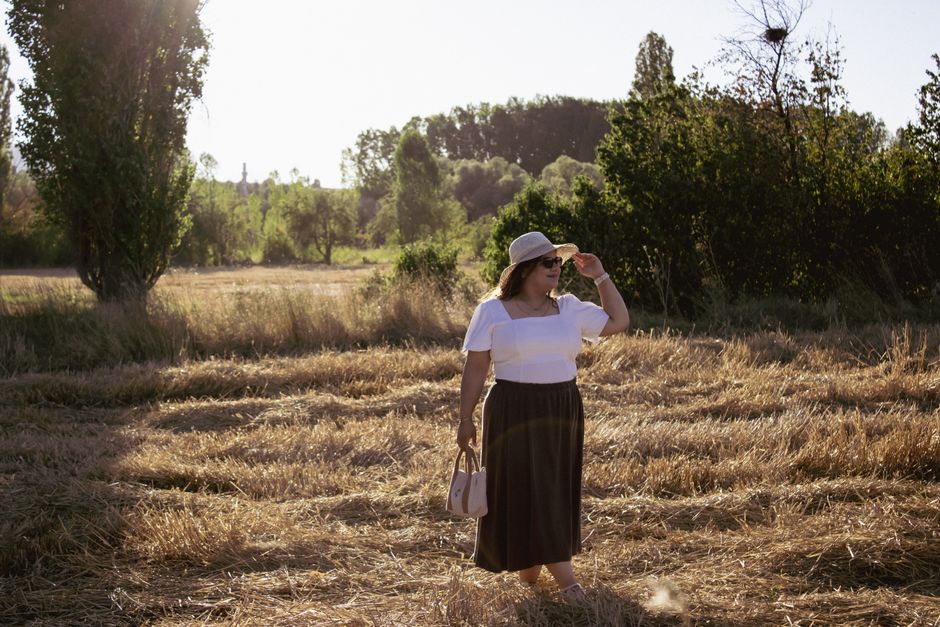
When I face the original white-T-shirt-and-jeans problem, I do not add five accessories. I choose one scarf and one belt, then check the proportions in a mirror. That two-minute mirror test catches most mistakes: if the scarf is louder than the face, fold it smaller; if the belt cuts the outfit in half, move it to the true waistband; if both accessories feel busy, remove the belt first.
For jeans and a plain shirt
Use a 35-inch square scarf folded into a narrow band, tied once under the collar, and a 1.25-inch brown leather belt. This is the most reliable casual formula because the scarf adds color near the face while the belt echoes the shoes. The UNIQLO silk square is enough for a trial run; the J.Crew printed version is the better long-term choice if you wear shirts and denim every week.
For a simple dress or blazer
Use a wide belt in a quiet color and keep the scarf smaller. A black or dark brown belt can give a plain shirt dress a clear shape, while a small scarf tied at the neck adds interest without covering the neckline. With a blazer, try a skinny scarf under the lapel and leave the belt off unless the jacket is intentionally designed to close at the waist. That is the resolution to the unfinished-outfit problem: scarves supply personality, belts supply structure, and the clothes still get to lead.