
Pull the inner seam of any shirt you own right now. If it’s fraying after two washes, you didn’t buy a basic — you bought a placeholder. The clothing industry has trained shoppers to evaluate price instead of construction, which is exactly why fast fashion keeps working: most people genuinely cannot tell the difference between a $15 tee and a $60 one when both are folded on a shelf.
This guide teaches you to read a garment the way a tailor does — fabric weight, seam finish, fiber percentages — so you stop cycling through basics every two years and start building pieces that hold up for ten.
Fabric Composition: The Numbers That Actually Determine Lifespan
The care label inside any garment is a quality report card. Most shoppers check size and move on. Start reading fiber percentages and GSM — grams per square meter — instead. Those two numbers predict lifespan better than brand name or price tag.
GSM: The Weight Test That Works
For cotton t-shirts, 180–220 GSM signals a durable, structured fabric. Anything under 150 GSM will feel thin on day one and turn see-through after ten washes. Uniqlo’s Supima Cotton T-Shirt runs around 160 GSM for $25 — that’s the acceptable floor. Everlane’s Air Crew hits 165 GSM at $35. Neither will fall apart, but a 200-GSM shirt will outlast both by several years of regular washing.
For casual linen shirting, look for at least 130 GSM. Linen is lighter than cotton by nature, but mass-market blouses often cut weight to 100–110 GSM to save production costs. Those shred at the collar within one season.
Fiber Percentages That Actually Matter
100% combed cotton outlasts standard ringspun in long-term durability. For sweaters: if acrylic exceeds 30% of the fiber content, expect visible pilling within six months of regular wear. The acrylic content is always the first thing to surface-deteriorate.
Polyester blends in “cotton” basics are the most common quality disguise. A 60% cotton / 40% polyester shirt wrinkles less and feels fine in the store. It will also permanently hold body odor by year two. If stretch is what you want, look for 95–97% cotton with 3–5% elastane — that ratio gives recovery without the smell-retention problem.
Linen: The Long-Staple Rule
European-sourced linen — Belgian and French mills specifically — uses longer flax fibers, which produce a smoother, stronger weave. Quince’s 100% European Linen Shirt ($70) explicitly notes French-milled fabric; that sourcing transparency matters. Budget linen from commodity mills uses short-staple flax that feels scratchy and develops holes at friction points (underarm seams, pocket edges) fast. If the product page doesn’t mention fiber origin, assume short-staple.
Construction Details That Tell You What the Price Tag Won’t
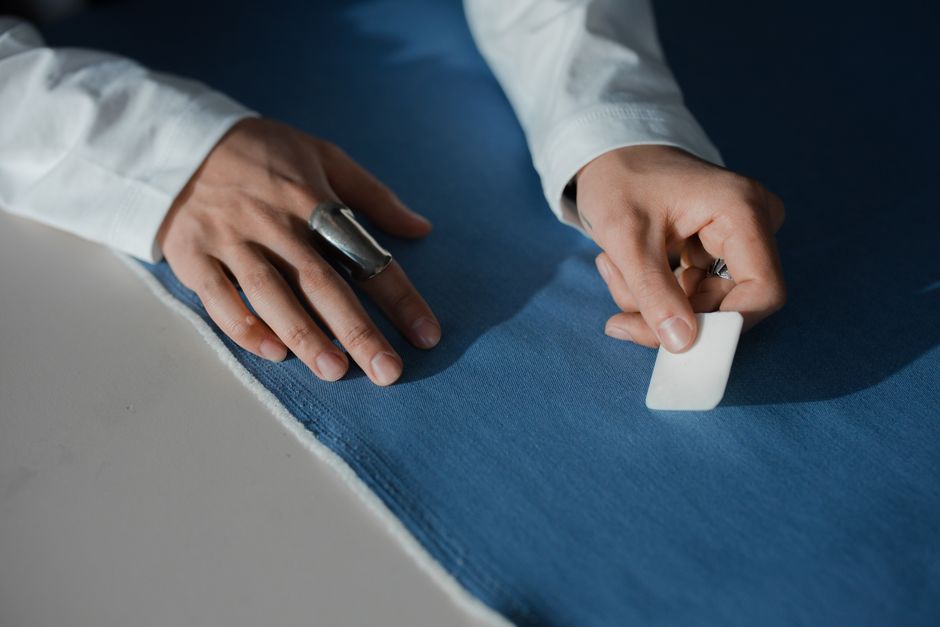
Quality fabric sewn badly will fail at the seams before the cloth itself wears out. Check these five things in order before buying anything meant to last:
- Seam allowance: The margin between the stitch line and the raw edge should be at least 1.5 cm (5/8 inch). Pinch a side seam and fold it open. Narrow allowances mean the seam will pull apart under stress — most common in underarm gussets and trouser crotch seams.
- Stitch density: Count stitches per inch on any straight seam. 10–12 stitches per inch is quality standard. Under 8 means the seam will unravel at stress points within months of regular wear.
- Seam finish: French seams on shirts and blouses encase the raw edge inside a second fold — no fraying possible. Serged edges are acceptable. Unfinished raw edges on interior seams are a cost-cutting signal, full stop.
- Button attachment: A well-attached button has a thread shank — a small neck of thread between the button and fabric — plus a reinforcing stitch on the inside. Flat buttons sewn directly through both layers with no shank will rip off within a year of daily use.
- Pattern matching: On striped or plaid fabric, horizontal stripes should align across the chest pocket and button placket. Mismatched stripes mean the brand rushed the cutting stage — and rushed cutting usually means rushed sewing throughout the entire garment.
What Real Quality Actually Costs Per Basic Item
There’s a quality floor below which no brand reputation saves you. There’s also a ceiling above which you’re paying for marketing, not fabric. This table reflects where durability actually starts in 2026:
| Basic Item | Key Quality Indicators | Price Range for Durability | Specific Picks |
|---|---|---|---|
| White T-Shirt | 180+ GSM, 100% combed cotton, double-stitched hem | $25–$60 | Uniqlo Supima ($25), Everlane Air Crew ($35), Organic Basics Tee ($45) |
| Dark-Wash Denim | 11–13 oz denim weight, selvedge or ring-spun construction, minimal stretch | $80–$220 | Levi’s 501 Original ($100), A.P.C. Petit Standard ($220), Madewell Slim ($128) |
| White Oxford Shirt | Oxford weave 140–160 GSM, mother-of-pearl or resin buttons, French seams | $50–$120 | Uniqlo Premium Oxford ($40), Land’s End Oxford ($60), Brooks Brothers Oxford ($95) |
| Navy Crewneck Sweater | 100% Merino or Lambswool, gauge 7–12, zero acrylic in fiber mix | $60–$180 | Uniqlo Fine Merino Crew ($60), Muji Merino Crew ($80), Johnstons of Elgin Lambswool ($160) |
| Linen Shirt | 100% European long-staple linen, 130+ GSM, flat-felled seams | $60–$130 | Quince European Linen Shirt ($70), Uniqlo Premium Linen ($50), Sézane Simon Shirt ($130) |
| Tailored Trousers | 50%+ wool content, lined to knee minimum, reinforced waistband | $80–$200 | Uniqlo Smart Ankle Pants ($50), Banana Republic Sloan ($120), J.Crew Emory Chino ($80) |
One pattern worth noting: the sweet spot for most categories is $60–$120. Below that, you’re making construction compromises. Above $200, you’re usually paying for brand equity, not better fabric.
Brands That Deliver Construction Quality Without Charging for the Logo

Uniqlo is the best value-for-construction brand available right now — and it’s not close. Their Supima Cotton, Fine Merino, and Premium Linen lines use better raw materials than most brands priced at 2–3x more. A Uniqlo Fine Merino Crew ($60) uses 100% fine merino and holds its shape after repeated machine washing. Most department store “merino” sweaters at $150 use 50% merino blends. The construction wins, not just the price.
Muji deserves more credit than it gets. Japanese quality control standards mean tight seam tolerances and consistent fabric sourcing across production runs. Their merino and linen basics are genuinely reliable year over year. The aesthetic is deliberately plain — that’s a feature for a decade-lasting wardrobe, not a limitation.
For denim specifically, A.P.C.’s Petit Standard ($220) is the single best investment in this category. The 12 oz Japanese selvedge denim stiffens with wear and then molds to your body over time — one of the few garments that improves rather than degrades with age. Levi’s 501 Original ($100) in raw denim is the backup option: construction isn’t as refined, but ring-spun cotton at proper weight still puts it ahead of anything under $80.
Land’s End remains consistently underrated for shirts and knitwear. Their Supima Cotton Oxford and classic chinos have held production standards that most mid-range retailers quietly dropped around 2010. The aesthetic runs traditional, but the seam construction is legitimately above its price point.
Five Signs You’re Holding Something That Won’t Survive the Decade
- Missing or vague fiber content label. In both the US and EU, fiber content disclosure is a legal requirement. A label that says “specialty blend” or lists no percentages is hiding something — usually a high synthetic content that signals shorter lifespan.
- Seams that pucker straight off the rack. Puckering means wrong thread tension or insufficient seam allowance. It won’t relax with washing — it compounds. Walk away.
- Fabric that pills in the store. Rub the inside of a sleeve against itself for ten seconds. If you see fiber fuzz forming, the fabric will pill under normal friction. On a garment you actually wear, that starts within weeks.
- Exposed raw edges on interior seams. Lift the hem of a sweater or jacket and look inside. Unfinished, fraying seam edges eventually work through to the exterior fabric. It starts as cosmetic; it ends as structural.
- Pattern misalignment on stripes or plaids. Check whether horizontal lines match across the chest pocket and button placket. Misalignment means rapid, careless cutting — and cutting speed reflects the overall pace of assembly throughout the garment.
When Investment Basics Are the Wrong Strategy
If your body size is actively changing — due to pregnancy, significant weight fluctuation, or ongoing athletic training — spend at the Uniqlo tier ($25–$60) and treat those pieces as rotating placeholders. A $150 trouser that won’t fit in eighteen months is a waste, not an investment.
The same applies during major lifestyle transitions. Building an investment wardrobe around a corporate job you’re leaving, or a social context you’re exiting, locks money into clothes that will sit unworn. Buy well for the life you’re living now, not the one you’re moving away from.