

A polished necklace stack often starts with two pieces, not five. The real secret is the space between each chain: a 2-inch gap usually looks more deliberate than three necklaces sitting at the same point on your chest. After years of wearing fine chains, pendants, pearls, and chunky links together, I have found that layering works best as a small outfit system rather than a pile of jewelry.
Use the right lengths, give each necklace a clear job, and stop adding pieces when the neckline already has enough movement. These rules create a clean stack for a T-shirt, button-down, knit sweater, or evening dress.
Choose Necklace Lengths That Create Visible Space
The first rule is simple: every necklace needs room to be seen. Chains that sit within half an inch of each other slide together, catch on clasps, and create one thick-looking line. That does not read as layered. It reads as tangled.
The best length gaps for a clean stack
Start with a short chain at 16 inches, then add an 18-inch necklace or a 20-inch pendant. For a three-piece stack, use 16, 18, and 22 inches. This gives each necklace a different landing point without leaving an awkward empty space below your collarbone.
| Stack level | Recommended length | Best role | Visual effect |
|---|---|---|---|
| First | 15 to 16 inches | Plain chain or tiny charm | Frames the base of the neck |
| Second | 18 to 20 inches | Medium pendant or textured chain | Adds the main detail |
| Third | 22 to 24 inches | Long pendant or fine chain | Draws the eye downward |
Use thickness as another spacing tool
Length is only half the equation. Put the thinnest chain closest to your neck and the heavier chain farther down. A 1 mm cable chain beside a 4 mm curb chain creates contrast. Two chains with the same width and finish can look flat, even when the lengths are correct. My default formula is thin, medium, then one deliberate focal piece.
Build the Stack Around One Clear Focal Point
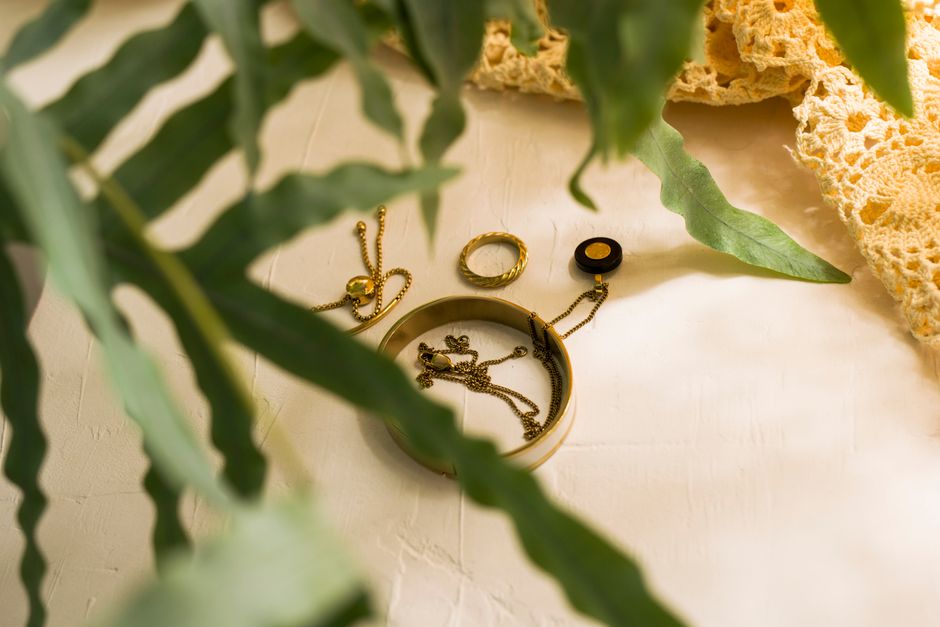
My strongest recommendation: choose one necklace to lead, then make every other piece support it. The focal point can be a pendant, a bold link, a colored stone, or a long chain. The stack looks expensive when the eye knows where to land.
- Pick the neckline first. A crew neck works with a 16-inch chain that follows the collar and an 18-inch pendant that drops below it. A V-neck needs a longer center line, usually 18 to 22 inches.
- Choose one hero detail. Use one pendant, one chunky chain, or one colored stone. Adding three competing charms makes the stack feel accidental.
- Repeat one feature. Match gold with gold, or repeat a shape such as a round pendant and round bead. Repetition makes mixed pieces look connected.
- Leave one quiet space. If the top chain is detailed, keep the middle piece plain. The eye needs a visual pause.
- Check the stack while moving. Turn your head, bend forward, and lift your arms. If the chains all slide into one knot, change the length gap before buying another necklace.
Match the necklace stack to the clothing
For casual outfits, a plain chain plus a small pendant is enough. With a blazer, use a low-profile 16-inch chain that stays above the lapel and one 20-inch pendant that falls over the shirt. High-neck sweaters need longer necklaces because short chains disappear into the fabric. The best polished stack is visible from across the room, but it never fights the garment.
Follow a Three-Step Layering Method That Holds Its Shape
Most necklace problems come from putting on the pieces in random order. A repeatable method makes the stack faster to style and easier to fix. I use the same three checks every time: anchor, contrast, and movement.
Start with the anchor necklace
The anchor is usually the shortest chain. It should be comfortable against the neck and simple enough to wear under the other pieces. A 15- or 16-inch chain works for many outfits, but measure before buying because neck size and clasp placement change the fit. Lay the chain flat on a table and measure from end to end, including the clasp only if the brand includes it in the listed length.
Put on the anchor first and check the neckline. If it sits directly on the collar of a crew-neck T-shirt, it will probably twist under the fabric. Move it slightly higher, or switch to a 14-inch choker-style chain if the design allows it.
Add contrast instead of adding clutter
The second necklace should do something different from the first. Pair a smooth cable chain with a paperclip chain, a polished finish with a brushed finish, or a plain chain with a small pendant. Do not stack three identical curb chains and expect length alone to create interest.
Mixed metals can work, but use a bridge. A two-tone necklace, a watch with a different metal, or a ring that repeats both finishes helps the combination look planned. Keep the metal ratio clear: mostly gold with one silver accent is easier to style than an equal split of four unrelated pieces.
Test movement before leaving home
Walk around for five minutes while wearing the finished stack. Touch your hair, sit at a desk, and put on the jacket you plan to wear. If the pendant flips backward, shorten the chain or choose a heavier pendant. If the chains twist, separate the clasps to opposite sides of your neck before fastening them.
A necklace separator can help with frequent tangles, but it is not magic. It adds hardware at the back and can feel bulky with delicate chains. For everyday wear, correct spacing beats extra accessories.
Which Necklace Types Make the Best Starter Stack?

People ask me this often because a beautiful stack can become expensive very quickly. My verdict is clear: buy one reliable 16- to 18-inch chain first, then add a pendant only after you know the length works with your clothes.
Is the Mejuri Box Chain a good base?
Yes. The Mejuri Box Chain Necklace, usually listed around $128 in 14k gold vermeil, has a clean square profile and a dependable 18-inch length. It works best as the middle layer because it has more presence than a cable chain but does not overpower a small pendant. For a polished everyday stack, this is my top starting point.
Keep the first layer narrow when using a box chain. A plain 1 mm chain above it creates enough contrast, and a 22-inch pendant below it completes the spacing. Avoid pairing it with another square or paperclip chain because the repeated geometry can look stiff.
When is the Missoma Fine Ridge Chain worth the price?
The Missoma Fine Ridge Chain Necklace, often priced near $145 in 18k gold vermeil, is the better choice for someone who wants texture without a heavy look. Its ridged surface catches light under a blazer or black knit. I would use it as the shortest layer at 16 inches, then add a quiet pendant below it.
Fine textured chains do not need extra decoration. Keep the rest of the stack smooth, avoid several charms, and check the clasp before wearing it with loose knitwear. Small links can catch on yarn.
What is the best lower-cost option?
The Ana Luisa Curb Chain Necklace, commonly listed around $75 in gold-plated brass, is my budget pick for testing the look. Its wider links create a visible middle layer, so it works well with a very thin 16-inch chain and no more than one long pendant. It is not the choice I would make for sleeping, swimming, or daily shower wear, but it offers enough structure to learn the proportions before investing in solid gold.
Fix the Common Layering Mistakes Before Buying More

Do not buy another necklace until you can name the problem with the current stack. Most messy combinations need a spacing change, not a larger jewelry collection.
Why do my necklaces keep tangling?
The usual causes are similar lengths, similar weights, and clasps sitting in the same place. Separate the lengths by at least 2 inches, move the clasps to different sides, and keep the lightest chain closest to your neck. If one pendant constantly flips, replace it with a heavier shape or use a shorter chain.
When should you skip necklace layering?
Skip a layered stack when the outfit already has a dramatic collar, a large scarf, a jeweled neckline, or a high-contrast pattern near the face. A single clean pendant often looks sharper with a ruffled blouse or embellished dress. Layering also makes less sense when the jewelry catches on your work uniform, sportswear, or delicate knitwear.
- Choose one metal as the main finish.
- Keep the shortest chain visible above the neckline.
- Use one focal pendant instead of several small charms.
- Remove the lowest layer if the outfit starts to look crowded.
- Store delicate chains flat or hang them separately to prevent new knots.
The polished result is usually the restrained one. Begin with two necklaces, create a clear gap, and add a third only when the outfit needs more length. That simple 16-18-22 formula solves the crowded-neckline problem that makes most stacks look messy in the first place.