

Most people think statement earrings have to be oversized, colorful, or covered in sparkle. That is why many collections end up with five pairs for special occasions and nothing that works with a Tuesday outfit. After years of wearing and sorting jewelry, I have found a better rule: every pair should solve a different styling problem. One should brighten a plain outfit, another should sharpen tailoring, another should add movement, and one should carry a dress when the rest of the look stays quiet.
A useful collection is not the largest one. It is the one that gives you a clear answer when you are dressed in two minutes and the outfit still feels unfinished.
Start with the outfit job, not the trend
Choose the face effect first
Before looking at colors or brand names, decide what you want the earrings to do near your face. A short, wide shape adds width and works well with long faces or narrow collars. A slim drop creates a vertical line and suits high necklines, open blazers, and hair worn close to the head. A rounded hoop softens sharp tailoring, while a geometric stud makes a soft dress feel more deliberate.
The best pair is often the one that fixes the balance of an outfit. If your top has a wide boat neckline, a compact but bold earring can keep the upper half from looking empty. If your dress has ruffles, bows, or a large print, a clean sculptural shape gives the eye somewhere to rest. I pay attention to the space between the earlobe and the shoulder because that area controls how much visual weight the face carries.
Give each pair one clear job
Write a one-line job description for every pair before buying it. For example: brightens black knitwear, adds polish to a white shirt, works with a low ponytail, or makes a simple evening dress feel finished. If you cannot give the pair a distinct job, it is probably repeating something already in your drawer.
This method also keeps a collection from becoming a trend archive. Fringe, flowers, pearls, and colorful stones can all earn a place, but only if they bring a different shape, texture, or level of formality. I prefer four useful contrasts over ten minor variations: polished versus organic, short versus long, neutral versus colorful, and lightweight versus dramatic. Those contrasts create more outfits than buying every new shape in the same metal.
Build the collection around four practical slots

The starter grid
A strong starter collection can cover most wardrobes with four slots. The measurements below are not strict laws, but they give you a useful buying limit when a product page makes every pair look irresistible.
| Collection slot | Useful size | Best outfit role | Visual character |
|---|---|---|---|
| Polished everyday pair | 18–28 mm | Shirts, knitwear, workwear | Metal, pearl, or smooth stone |
| Color pair | 25–45 mm | Denim, simple dresses, summer separates | One strong color with a clean outline |
| Movement pair | 45–75 mm drop | Open necklines and evening outfits | Chain, fringe, or articulated pieces |
| Art pair | 30–55 mm | Minimal outfits and creative dressing | Unusual shape, texture, or asymmetry |
Use a two-color ceiling
I also set a two-color ceiling for the first six pairs. Choose one metal and one accent color, then add neutrals such as clear crystal, ivory, black, or tortoiseshell. This makes the collection easier to combine with clothing and prevents the common mistake of buying a bright pair that only works with one blouse.
Gold and ivory create a warm, quiet base. Silver and clear crystal feel sharper. Gold with cobalt, red, or emerald gives more energy without forcing the whole outfit into a theme. Start with the metal you already wear most often, not the finish that happens to dominate the season.
Match visual weight to the fabric
My strongest styling rule is simple: delicate fabric needs a controlled earring, while sturdy fabric can carry more weight. A fine silk blouse looks better with a slim drop, small sculptural hoop, or compact stone because a very heavy piece can pull the outfit downward and make the fabric look flimsy. Denim, leather, wool, and dense cotton can handle larger hoops, thicker metal, layered fringe, and textured shapes because their surface already has enough visual strength to support the accessory. The mistake is not wearing a big earring with a fine fabric; the mistake is combining high shine, large scale, and lots of movement when the garment has no structure to balance them. If you want a dramatic earring with a delicate dress, remove one competing detail: skip the necklace, choose a quiet shoe, and keep the hair simple so the earring becomes the deliberate focal point rather than one more loud object near the face.
Use a fitting test before you buy

Test comfort before judging style
I never decide from a mirror photo alone. A pair can look perfect in a product image and become annoying after twenty minutes. Try the following sequence when shopping in person, or use the listed measurements and return policy when shopping online.
- Check the post and backing. The post should sit straight through the lobe, and the backing should hold the earring without pinching. A loose backing is a practical problem, not a small detail.
- Estimate the weight. For an all-day pair, I aim for roughly 2–4 grams per earring. Pieces around 5–8 grams can work for dinner or a short event, but I would not call them daily earrings.
- Watch the swing. Turn your head, tuck your hair behind your ear, and walk a few steps. Movement should look intentional. If the earring catches constantly on hair or clothing, it will stay in the box.
- Check the drop against your shoulder. A 20 mm pair can feel bold on a short haircut, while a 70 mm drop may disappear beneath thick hair. Measure from the front of your lobe to the widest point of the design.
- Look for irritating finishes. Rough edges, mystery metal, and posts that leave a dark mark deserve caution. If your ears react easily, choose sterling silver, gold-filled, titanium, or a clearly labeled hypoallergenic post.
- Test the outfit, not only the earring. Hold the pair beside three garments you already own. If it works with only one color or neckline, treat it as an occasion purchase rather than a collection essential.
Know the red flags
Do not buy a dramatic pair just because it photographs well. Extremely thin hooks, glued-on decorations, and backs that cannot be replaced shorten the useful life of a collection. I also avoid earrings that imitate a dozen unrelated trends at once. A complicated design is harder to style and harder to repair.
The best test is repetition. Wear the pair for two different days, with your hair up and down, before deciding that it belongs in regular rotation.
The three starter pairs I would actually buy
My clear preference is to spend first on one polished pair, one affordable color pair, and one high-impact evening pair. That mix gives a new collection range without turning the jewelry drawer into a shopping experiment. Prices can change, but these examples show the roles I mean.
Best polished anchor: Kendra Scott Danielle Statement Earrings
The Kendra Scott Danielle Statement Earrings in Silver with Ivory Mother-of-Pearl are listed at $85. I like this style as an anchor because the soft ivory center adds interest without locking you into a bright color, while the symmetrical outline feels neat with a blazer, sweater, or simple dress. Choose this pair when you want the earring to look finished and visible but still appropriate for repeated wear. The silver version is my pick for cooler wardrobes and black, navy, gray, or white clothing.
Best lower-cost color experiment: BaubleBar Frances Crystal Drop Earrings
The BaubleBar Frances Crystal Drop Earrings are listed at $38. This is the kind of pair I would choose when someone wants sparkle but does not yet know if crystal earrings fit their real wardrobe. At that price, the style can fill the color or evening slot without demanding a major commitment. Wear it with a plain black top, dark denim, or a clean satin dress. Keep the necklace minimal; the drop already supplies the shine near the face.
Best playful texture: Anthropologie Paillette Cluster Drop Earrings
Anthropologie lists the Paillette Cluster Drop Earrings at $58. They suit the movement slot because the clustered, decorative shape gives a plain outfit personality without relying on a large logo or an overly formal finish. I would wear them with a solid knit, a relaxed linen shirt, or a simple slip dress. They are the best choice of these three for someone who wants compliments from a more artistic accessory rather than a classic jewelry look.
Questions I ask when a pair almost works
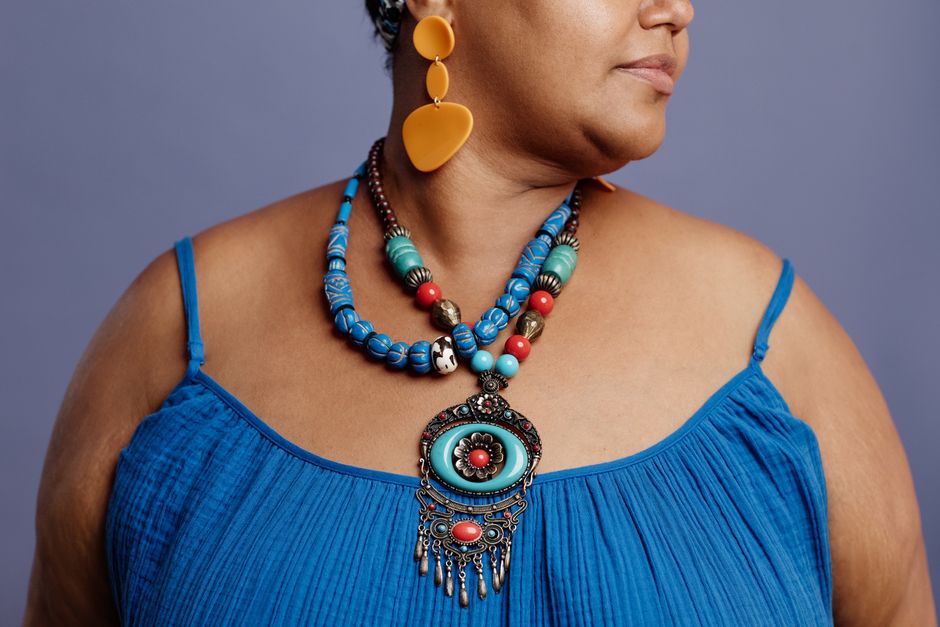
Do statement earrings need to match a necklace?
No. In most outfits, matching necklace-and-earring sets make the accessories look planned in a dated way. Match the mood or one metal instead. If the earrings have movement, leave the neck bare or wear a very fine chain. If the earrings are compact and graphic, a short necklace can work, but it should not copy the same shape.
Should I choose gold or silver first?
Choose the metal that appears most often in your existing watch, rings, belt hardware, and handbag details. That gives the first pair a better chance of earning regular wear. If your wardrobe mixes metals, buy a neutral design with a simple surface rather than a heavily decorated two-tone piece. A clean mixed-metal earring is easier to repeat than one with several competing finishes.
When should I skip a statement pair?
Skip it when the earring hurts within ten minutes, hides under your hair, or only works with a single outfit. Also skip a pair that competes with a garment’s strongest detail. A beaded neckline, large scarf, dramatic collar, and oversized earring can all be good alone, but together they create clutter. Choose the accessory that gives the outfit the clearest focal point.
Make the collection earn its space
Run a one-month outfit audit
After buying a pair, photograph three outfits with it during the first month. Record the garment, neckline, hairstyle, occasion, and how long you wore the earrings. This small record shows the truth quickly. A pair that looks excellent in a flat lay may fail with your usual haircut, commute, glasses, or coat collar. A less exciting pair may quietly become the one you reach for twice a week.
Keep the pairs that solve different problems. If two designs brighten the same white shirt in the same way, keep the lighter or more comfortable version. If every pair is a long drop, add a compact shape before buying another dramatic one. The aim is not symmetry in the jewelry box; it is coverage across real dressing situations.
Use the final three-outfit test
Before adding another pair, style it with one casual outfit, one work outfit, and one evening outfit. It does not need to look perfect in all three, but it should succeed in at least two without special purchases. That standard protects your budget and keeps the collection connected to your closet.
Statement earrings are not meant to make every outfit louder. They are meant to give the outfit a decision. Start with the pair that fixes your most common styling gap, add contrast through shape and scale, and let comfort decide what stays. The rushed Tuesday outfit from the opening problem then has a simple answer: one deliberate pair, not the entire jewelry drawer.