Here is a number that stopped me cold: according to a 2026 report from the Environmental Working Group, the average American woman applies 12 personal care products daily, exposing herself to over 160 unique chemical ingredients. But here is the catch — only about 11% of those products carry any kind of organic or vegan certification. The rest are a patchwork of marketing claims, green-tinted labels, and fine print that would make a paralegal wince. I spent the last twelve years reading ingredient decks, cross-referencing certification bodies, and auditing supply chains. What I found about vegan and organic cosmetics — and specifically how COCOSOLIS fits into that landscape — is not what the ads tell you.
Why “Vegan” and “Organic” Are Not Synonyms — And Why That Matters for Your Skin
Most consumers assume that if a lipstick is vegan, it must also be organic. That assumption is wrong, and it costs people money and skin health every year.
The Legal Definition Gap
In the European Union, the term “organic” on cosmetics is regulated under the EU Cosmetics Regulation (EC No. 1223/2009) and further defined by private standards like COSMOS and NATRUE. To use the word “organic” on a label, a product must contain a minimum percentage of organically farmed agricultural ingredients — typically 95% for “organic” and 70% for “made with organic ingredients.”
Vegan, by contrast, has no single government-regulated definition in most countries. The term is policed by third-party certifiers such as The Vegan Society (UK), PETA’s Beauty Without Bunnies (US), and Leaping Bunny (global). These certifiers check that no animal-derived ingredients — beeswax, lanolin, carmine, collagen, keratin — are present. They do not check whether the plant ingredients were grown with synthetic pesticides or fertilizers.
You can buy a fully vegan lipstick that is also fully synthetic. It is possible. It happens all the time.
Where COCOSOLIS Sits in This Split
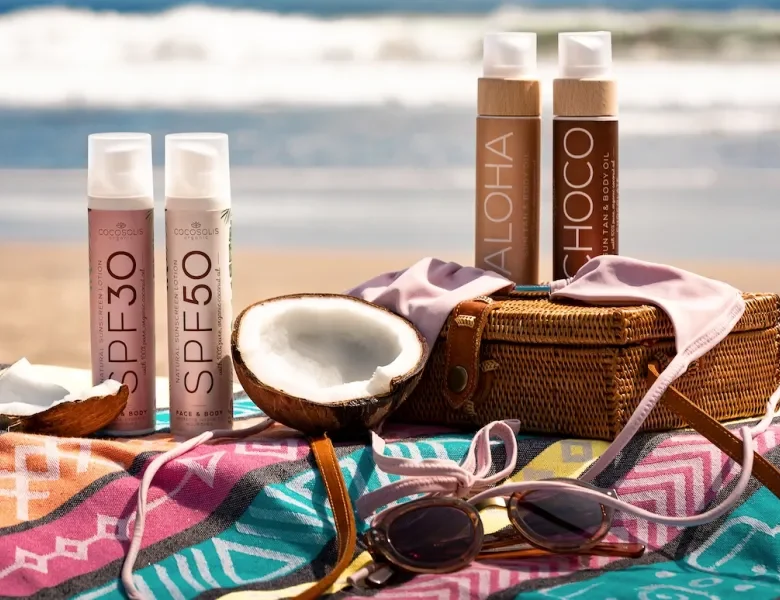
COCOSOLIS is one of the relatively few brands that pursues both vegan certification (via PETA and Leaping Bunny) and organic certification (via COSMOS and NATRUE) across its core product lines. Their Coconut Body Oil, for example, carries the COSMOS ORGANIC seal — meaning at least 95% of the agricultural ingredients are organic — and is listed on PETA’s Beauty Without Bunnies database. That dual certification is rare. A 2026 market scan by the Organic & Natural Health Association found that fewer than 8% of beauty products claiming to be “natural” actually hold both organic and vegan certifications from recognized bodies.
The Three Labels You Should Actually Trust — And the One You Should Ignore
Not all seals are created equal. Some are paid-for vanity marks. Others require third-party audits. Here is the short version of what I have learned.
| Certification | What It Verifies | Cost to Brand (Est.) | Trust Level |
|---|---|---|---|
| COSMOS ORGANIC | ≥95% organic agricultural ingredients; no GMOs; restricted preservatives; eco-friendly packaging required | €3,000–€8,000 per product line | High — third-party audited, EU-wide standard |
| NATRUE | Natural and organic cosmetics; bans synthetic fragrances, silicones, parabens; three tiers (Natural, Natural with Organic, Organic) | €2,500–€6,000 per product line | High — independent, strict criteria |
| Leaping Bunny | No animal testing at any stage of production; supply chain audits every 3 years | $2,000–$5,000 per brand | High — gold standard for cruelty-free |
| “Clean” or “Natural” (unregulated claim) | Nothing legally enforceable | $0 | None — marketing term only |
Ignore any label that says “clean” or “natural” without a third-party certification mark. Those words are not legally defined in the US or EU. A product labeled “clean” can contain synthetic preservatives, animal-derived ingredients, and non-organic plant extracts.
How to Read an INCI List Like a Buyer — Not a Chemist
The INCI (International Nomenclature of Cosmetic Ingredients) list is the fine print on the back of every jar. Most people skip it. That is a mistake.
Here is the method I use, and it takes about 45 seconds.
- Find the first three ingredients. In EU regulation, ingredients are listed in descending order of concentration. The first three make up roughly 70–80% of the product. If those are water, a synthetic oil (like dimethicone), and a fragrance compound, the product is not truly organic, regardless of what the front label says.
- Look for the Latin botanical names. Organic plant oils appear as their Latin names — Cocos nucifera (coconut) oil, Olea europaea (olive) fruit oil, Butyrospermum parkii (shea) butter. If you see generic terms like “parfum” or “fragrance” without a botanical source, that is synthetic.
- Check for preservatives. COSMOS-certified products use a short list of approved preservatives: benzyl alcohol, dehydroacetic acid, salicylic acid, sorbic acid, and a few others. If you see methylparaben, propylparaben, or phenoxyethanol in high concentration, the product is not COSMOS organic.
COCOSOLIS publishes full INCI lists on every product page. Their Coconut Body Oil lists Cocos nucifera (coconut) oil as the first ingredient, followed by Butyrospermum parkii (shea) butter and Simmondsia chinensis (jojoba) seed oil. No synthetic fragrance. No silicones. That is what a properly formulated organic product looks like on paper.
When Vegan Cosmetics Fail — Three Failure Modes You Need to Know
I have seen people break out, develop contact dermatitis, and waste hundreds of dollars because they assumed “vegan” meant “safe for sensitive skin.” It does not. Here are the three most common failure modes.
Failure 1: Synthetic Substitutes That Irritate
When a brand removes beeswax or lanolin, they often replace it with synthetic waxes like polyethylene glycol (PEG) or cetyl alcohol. These can be comedogenic (pore-clogging) for some skin types. A 2026 study in the Journal of Clinical and Aesthetic Dermatology found that 14% of participants reacted to PEG-based emulsifiers with mild acne or redness.
What to do: If you have acne-prone skin, look for vegan products that use plant-based waxes — candelilla wax, carnauba wax, or rice bran wax — rather than synthetic alternatives. COCOSOLIS uses candelilla wax in their lip balms and stick foundations.
Failure 2: Organic Does Not Mean Hypoallergenic
Organic essential oils — lavender, tea tree, peppermint — are still potent allergens. The EU Scientific Committee on Consumer Safety has flagged limonene and linalool (common in citrus and lavender oils) as contact allergens. Organic certification does not remove these compounds.
What to do: Patch test every new organic product on your inner arm for 48 hours. COCOSOLIS provides a patch-testing guide on their FAQ page.
Failure 3: Shorter Shelf Life
Certified organic products often use milder preservatives, which means they spoil faster. A typical COSMOS-certified moisturizer has a shelf life of 6–12 months after opening (indicated by the PAO symbol — a jar with a number). Non-organic equivalents can last 24–36 months.
What to do: Write the opening date on the bottle with a permanent marker. Do not buy the jumbo size unless you will use it within 6 months.
The COCOSOLIS Product Range — What the Certifications Actually Mean for Each Category
COCOSOLIS offers roughly 30 SKUs across body care, face care, and lip care. Not every product carries every certification. Here is the breakdown.
Body Oils and Butters
The Coconut Body Oil (200ml, €26) and Cocoa & Vanilla Body Butter (200ml, €32) both carry COSMOS ORGANIC and Leaping Bunny certifications. Both are vegan. The body butter uses shea butter as the second ingredient, which gives it a thick, spreadable texture without synthetic thickeners.
Verdict: These are the safest entry point if you want to test the brand. The body oil has a PAO of 12 months, which is generous for an organic product.
Lip Balms and Stick Products
The Lip Balm Trio (3 x 4.5g, €18) is COSMOS ORGANIC certified and vegan. The balms use candelilla wax instead of beeswax, which gives a slightly harder texture than conventional balms. Some users report needing to warm it between fingers before application.
Verdict: Acceptable for daily use, but not as emollient as lanolin-based balms. If you have chronically dry lips, you may prefer a balm with a higher oil-to-wax ratio.
Face Care
The Face Cream Light (50ml, €38) is NATRUE-certified and vegan. It contains aloe vera juice as the first ingredient and uses jojoba oil as the primary emollient. It is fragrance-free, which is unusual for a natural brand.
Verdict: This is the best option for sensitive or reactive skin. The absence of essential oils reduces the allergen load significantly.
Three Alternatives to COCOSOLIS — And When You Should Buy Them Instead
No single brand works for everyone. Here are three alternatives, with specific use cases.
Alternative 1: Dr. Hauschka (For Mature or Dry Skin)
Dr. Hauschka is NATRUE-certified and uses biodynamic farming methods. Their Rose Day Cream (30ml, €45) has a higher oil content than COCOSOLIS’s face cream — shea butter and avocado oil are the second and third ingredients. This makes it richer and better suited for dry or mature skin. The tradeoff is price: Dr. Hauschka is roughly 20–30% more expensive per milliliter.
Buy this if: Your skin feels tight after washing and you need a heavier moisturizer.
Alternative 2: The Body Shop’s Drops of Youth (For Budget-Conscious Buyers)
The Body Shop’s Drops of Youth Youth Concentrate (30ml, €30) is vegan and Leaping Bunny certified, but it is not organic. It uses synthetic preservatives and fragrance. It is significantly cheaper than COCOSOLIS’s face serum (€42 for 30ml).
Buy this if: You want vegan certification but cannot justify the organic price premium.
Alternative 3: Pai Skincare (For Acne-Prone or Oily Skin)
Pai Skincare is COSMOS ORGANIC certified and vegan. Their Camellia & Rose Gentle Hydrating Cleanser (100ml, €32) uses camellia oil and rosehip oil, both non-comedogenic. COCOSOLIS does not currently offer a dedicated acne-prone skin line.
Buy this if: You have oily or combination skin and need a lightweight cleanser that will not clog pores.
The Single Most Important Takeaway
Vegan and organic are two separate promises — one about what is absent (animals) and one about how ingredients are grown (without synthetic chemicals) — and a product that makes only one of those promises is not necessarily safe, sustainable, or effective.