
Does your base separate around your nose, slide off your cheeks, and look heavy before lunch? You leave home with fresh skin, walk three blocks in humid air, then catch your reflection in a shop window. The tinted base has gathered in every crease. Your blush has vanished. Your face looks shinier than your outfit.
The fix is not piling on more powder. Warm-weather makeup works better when you use fewer layers, choose formulas with the right finish, and apply color where heat will not move it around. A tinted moisturiser and cream blush can create a polished face in minutes, but only if you understand what each product can and cannot do.
How do you choose a lightweight base for heat?
What should a lightweight base feel like?
A good warm-weather base should feel almost invisible after five minutes. Apply it, wait, smile, and touch the side of your nose. If the formula feels tacky, thick, or tight, it will probably become uncomfortable once the temperature rises. Look for sheer or light coverage, a flexible finish, and a shade that matches your current skin rather than your winter complexion.
Do not treat the word moisturiser as proof that the formula suits dry skin. Some tinted moisturisers contain emollients that look lovely on flaky areas but move quickly across an oily forehead. Do not treat “matte” as proof of long wear either. A dry, fast-setting formula can cling to texture and crack when you sweat.
How much coverage do you actually need?
Start by naming the problem. If you want to reduce redness and make your face look more even, sheer coverage is enough. If you need to hide one spot or a dark mark, use a small amount of concealer only there. Covering the entire face to solve one blemish creates unnecessary weight and makes the rest of your makeup harder to control.
The strongest choice for most warm days is a breathable base plus targeted concealer. That pairing keeps the skin visible, uses less product, and gives you an easier touch-up later.
Tinted moisturiser vs skin tint vs foundation: which lasts?
The finish matters more than the label
Product names are inconsistent, so judge the formula by coverage, texture, and set time. These are useful starting points:
| Base type | Typical coverage | Best warm-weather use | Main tradeoff |
|---|---|---|---|
| Tinted moisturiser | Sheer to light | Evening tone while keeping skin visible | Will not hide strong marks alone |
| Skin tint | Sheer to light-medium | Fast daily makeup with a thinner feel | Some formulas need extra moisture underneath |
| Light foundation | Light to medium | More polished coverage for work or events | Can feel heavier as oil and sweat build |
| Powder foundation | Light to full | Quick shine control and easy touch-ups | Can catch on dry patches |
The fastest decision rule
Pick tinted moisturiser when you want skin to look like skin. Pick a skin tint when you want a very thin veil with less emphasis on moisture. Pick light foundation when you need a more even finish that will look polished in photographs. For a hot commute, the tinted moisturiser is the best starting point because it leaves less product on the face.
One warning matters more than the label: a base with SPF is not a complete sunscreen plan. Apply broad-spectrum sunscreen in the amount directed on its packaging, let it settle, then add makeup. Treat the complexion product as makeup with a bonus, not as the only layer protecting your skin outdoors.
What is the best two-product warm-weather makeup routine?
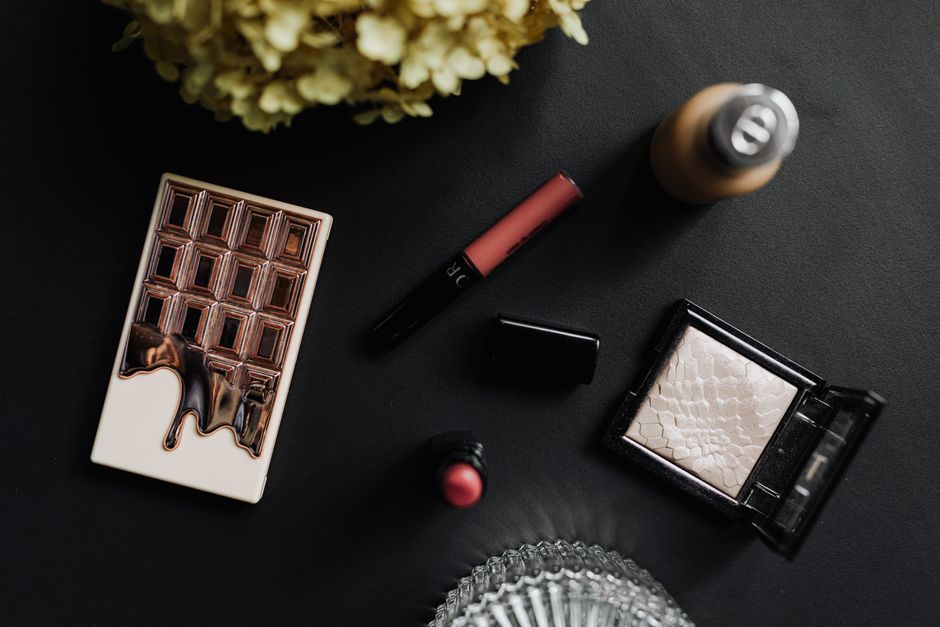
Use NARS Pure Radiant Tinted Moisturizer SPF 30 with Saie Dew Blush when you want the most polished version of a lightweight face. NARS gives sheer, buildable coverage with a radiant natural finish and 16 listed shades. Saie’s liquid-cream blush has a doe-foot applicator, eight shades, and enough pigment to show through a thin base without looking painted on.
Why this pairing works
The base evens the face without erasing its natural variation. The blush then brings back colour on the cheeks, where a very sheer base can leave you looking flat. Both products suit a quick routine because neither needs a complicated brush system. Use your fingers for the base and tap the blush into place with fingertips or a small sponge.
The finish is fresh rather than powdery, which makes it right for dry or normal skin and for anyone who dislikes the feel of foundation. The tradeoff is clear: this is not the pair for a long outdoor festival, a very oily T-zone, or full coverage. In those situations, set only the centre of the face and keep a concealer nearby.
How to keep the glow controlled
Place blush slightly higher than the roundest part of the cheek. Blend outward toward the temples, then press a small amount of powder beside the nose and under the lower lip. Avoid dusting powder across the whole cheek. That would remove the dimension that makes cream blush look natural.
How do you apply tinted moisturiser and cream blush?
Five steps that prevent sliding
- Prep lightly. Apply moisturiser only where the skin feels tight. Give it five minutes to settle. Add sunscreen as the final skincare layer and wait again until the surface no longer feels wet.
- Use a small amount of base. Start with a pea-sized amount for the whole face. Dot it on the cheeks, forehead, nose, and chin, then spread outward. Add a second thin layer only where redness still shows.
- Press instead of rubbing. Use fingertips or a damp sponge to press the base into the skin around the nose and mouth. Rubbing repeatedly lifts the sunscreen and creates patchy edges.
- Apply cream blush after the base settles. Wait about one minute. Place one small dot on each cheek first. Build slowly; adding colour takes seconds, while removing too much requires redoing the base.
- Set only the areas that move. Tap translucent powder along the sides of the nose, centre forehead, chin, and under-eye crease. Leave the cheek area mostly untouched so the blush keeps its soft finish.
The mistake that ruins the routine
Do not swipe a dense cream blush stick directly across freshly applied base if your skin is prone to lifting makeup. That pressure drags the layer underneath. Pick up colour with your finger or brush, then press it onto the cheek. The result takes longer by roughly thirty seconds and looks far cleaner.
Do not keep adding powder every time the face becomes shiny. Blot first with tissue or blotting paper. Powder over oil creates a thicker film, and that film is more likely to separate by late afternoon.
Which tinted moisturiser and cream blush products are worth buying?
Best base for a radiant, even finish
NARS Pure Radiant Tinted Moisturizer SPF 30 is the best overall base for warm-weather makeup. It is listed at $50 in the United States, offers sheer buildable coverage, and comes in 16 shades. The finish stays radiant without looking like wet skincare, and the formula makes sense for readers who want redness softened rather than completely erased.
Laura Mercier Tinted Moisturizer Light Revealer Natural Skin Illuminator SPF 25 is the better pick for someone who wants a brighter, more luminous finish. It is listed at $54 for 1.7 ounces or 50 millilitres. The formula gives a more obvious glow, so it works best on dry or normal skin. Skip it if your forehead turns shiny within an hour.
Best cheek colour for different needs
| Product | Listed price | Useful detail | Verdict |
|---|---|---|---|
| Saie Dew Blush | $25 | Liquid-cream formula, doe-foot applicator, 8 shades | Best for a sheer-to-bold flush |
| Tower 28 BeachPlease Lip + Cheek Dewy Cream Blush | $20 | Non-comedogenic, dewy finish, vegan formula | Best value for a soft dewy cheek |
| ILIA Multi-Stick | $25.20 | Twist-up cheek and lip colour, 12 shades | Best for a compact travel routine |
My clear pairing verdict: choose NARS and Tower 28 for the easiest everyday face under $70 before tax. Choose Laura Mercier and ILIA when you want a brighter, more portable routine. Prices can change by retailer and country, but the product differences remain useful.
When should you skip tinted moisturiser and cream blush?
Skip the sheer base when coverage is the real job
Tinted moisturiser is the wrong purchase if you need to cover widespread acne, strong hyperpigmentation, or a formal-event complexion. You will apply more and more product, then wonder why it feels heavy. Use a light foundation or concealer in targeted areas instead. That gives you control and usually looks cleaner than forcing a sheer product to behave like full coverage.
Choose powder when heat and oil will win
Cream blush is also not automatically the best warm-weather choice. If you work outside, sweat heavily, or dislike any tacky finish, a long-wearing powder blush may serve you better. Apply a thin base, powder the centre of the face, and place the blush over that controlled surface. The finish will look less dewy, but it will need fewer repairs.
The strongest warm-weather routine is not the one with the most skin-like claims. It is the one that matches your heat, oil, coverage needs, and willingness to touch up. For normal days, tinted moisturiser and cream blush remain the most efficient combination: light, quick, and easy to adjust. As makeup formulas get thinner and more flexible, the category is moving toward a useful middle ground between skincare and colour, with better shade matching and less product sitting on the face.